So I Had to Ask: Why Not Call This a Military Operation or Targeted Military Action? I Did Not Expect to Get an Easy Answer! There is a reason so many people look at the current Iran fight and instinctively say: this did not begin as a “war” in the way the public usually imagines one.
Well, wait a second, I’m talking about myself here. I have no clue what the general public thinks about it. Regardless, I think the bombings themselves and the execution of the operation look like they’re going really well, which is expected of course and so I get that. But considering the critics, I asked myself why the Trump administration didn’t just call this an operation, or a joint one with Israel. And, then call it a day. That way there would have been far fewer skeptics and critics if it was all about the mission.
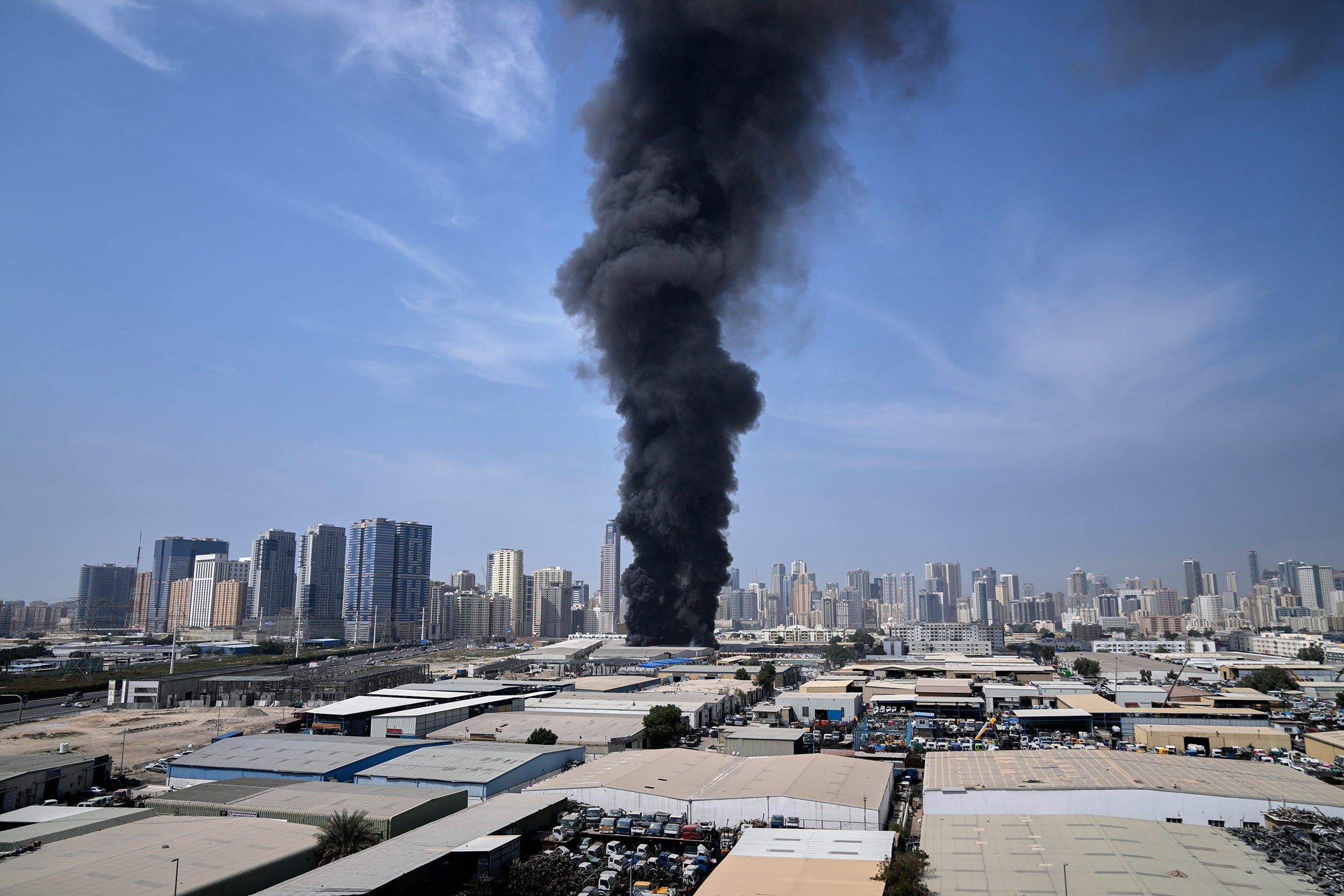
It sounded so easy to me, and honestly I felt the messaging machine alone could have pulled that off. But again, I was proven wrong in a surprisingly simple way, something I must have learned back in elementary school but never really thought about again. That is if I even learned i but to me, it looks, sounded so far, and was sold more like a coordinated military action with Israel, built around a familiar modern objective set: degrade nuclear capacity, shatter command nodes, eliminate dangerous actors, and force strategic dislocation at the top.
That is how a great deal of contemporary force is introduced to the public now or again, the actions to me sound like operations and not as the beginning of war, but as a controlled operation with bounded aims, clean messaging, and the implication that precision somehow reduces the political weight of what has begun. Yet I find out that under international humanitarian law, the legal threshold is not the headline or name of the War, the speech, or the euphemism. It is the resort to armed force between states. Once that happens, the law of armed conflict is triggered, whether anyone likes the word “war” or not.
I did not know that was how we determine wars in U.S. history. In reality, I had always thought that Congress determined when we were at war, while the military, the Joint Chiefs of Staff, and the President deal with covert or overt military actions or operations. It was really a matter of wording and terms that I had always gotten wrong, because Congress does not determine whether we enter wars per se. Well, I don’t exactly know what they determine, but it’s not them legally deciding whether something is a war.
It seems so simple that if they fight back, then it becomes a war.
That is the part I do not tghink I was ever really taught in a clear way. I happen to think that the general (as in this is a generalization) public has been conditioned to think of war as something ceremonious and unmistakable: declarations, invasions, massive troop movements, years of occupation, endless news banners, and a clean before-and-after line in history books. By public, I mean me too. I now realize that modern conflict does not wait for any of that. The Geneva Conventions deliberately moved away from making formal declarations decisive, precisely so states could not dodge humanitarian obligations by claiming they were conducting something short of “war.” In the modern legal framework, the first meaningful use of force between states is enough.
There is no minimum casualty count, no required duration, and no political branding exemption.
Now I understand how Grenada became an actual war. Now I get it. Remember that movie about the Grenada invasion? It was so boring. I think there was one fight, with three bullets being shot and one injured or dead person. Everything was clean, too. There was no litter during the Grenada War. Let alone any blown up buildings.
In reality, that is why the public often experiences a lag between what they are seeing and what lawyers, diplomats, and military analysts already know. To the average observer, a one-off strike can feel like an action, a raid, or a message. It feels temporary. It feels surgical. It feels like something that can be contained through framing.
It’s what I see on TV when watching every James Bond film, and when rewatching Strike Back every season, like I just did. That’s also why I watch so many of those films and streaming shows. I love the idea of having a license to kill and using it to stop bad actors and terrorists, not only from carrying out bomb attacks, but also from obtaining the parts and weaponry needed to build those bombs in the first place.
Also, I was thinking about writing a book about twelve to fifteen covert and top military units, such as the Navy SEALs, Airborne Rangers, and the Marine Corps’ elite divisions. One chapter would focus on the U.S. military, and the second chapter would cover Israel’s covert operations forces, and so on with MI6 and other elite military units, but I never wrote it.
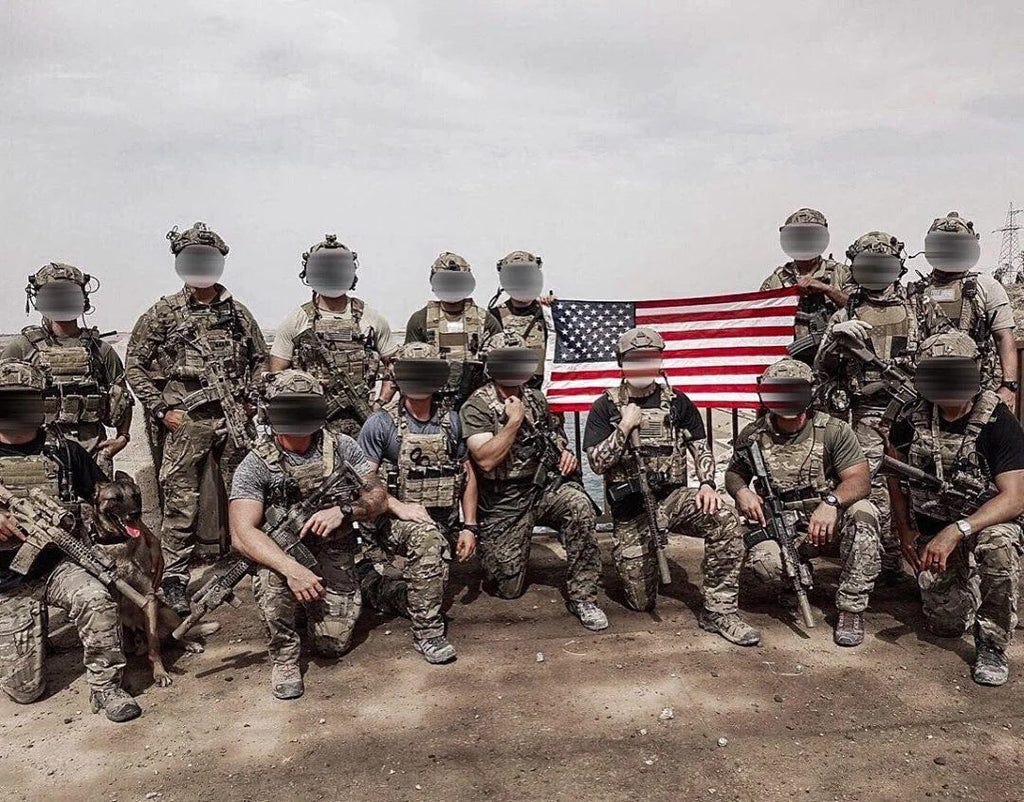
At the time, I had information or a description about how they reportedly entered Iran undercover and without the world knowing in order to sabotage a nuclear bomb-making site or facility. There were accounts suggesting that they had gone into Iran to target its nuclear capabilities on their own and unilaterally, again as part of a covert operation. That was the example given to me at the time of a succesful operation.
But the law is built to deal in realities, not atmospherics. If one state uses armed force against another state, an international armed conflict exists. That is true even before the public settles on the vocabulary. It becomes even more obvious once retaliation begins, because reciprocal force strips away the illusion that this was merely a disciplined burst of coercion. Once missiles come back, once drones return fire, once casualties mount and the exchange sustains itself, almost everyone starts using the word they were initially encouraged to avoid: war.
That distinction matters because governments often prefer softer language at the front end for reasons that have very little to do with precision and everything to do with politics. “Military operation,” “limited strike,” “defensive action,” and “targeted response” all perform the same communications function. They imply control. They imply proportionality. They imply that leaders are still beneath the threshold where the public might ask harder questions about authorization, escalation, civilian exposure, duration, cost, and strategic end state. The public hears “operation” and assumes boundaries. The law hears “use of armed force” and applies obligations immediately. That gap between political messaging and legal reality is one of the defining features of twenty-first century conflict.
Seen from that angle, the instinct to describe the opening phase against Iran as a joint military action with Israel rather than an old-fashioned declared war is not irrational. It is, in fact, very close to how these campaigns are conceived and sold. Recent reporting has described a coordinated U.S.-Israeli campaign against Iranian military and strategic targets, with Israeli officials publicly preparing for a campaign measured in weeks rather than a single isolated night of action. President Donald Trump said on March 9 that ending the war with Iran would be a “mutual” decision made in coordination with Israeli Prime Minister Benjamin Netanyahu, a statement that itself underscores how interlocked the campaign has become at the leadership level. So by that standard, whose war is it?
That is where the public’s common-sense reading and the legal framework meet. At first glance, it can look like a high-end military solution set: partner with a capable ally, conduct strikes designed to dismantle nuclear progress and missile infrastructure, take out key threats, and try to impose strategic shock before the target can stabilize. But once the target state retaliates, the semantic escape hatch closes. The argument that this is simply a tightly bounded action becomes harder to sustain, not because the original intent necessarily changed, but because the facts on the ground did. In today’s conflict, Reuters and AP have both described sustained reciprocal fighting, wider regional consequences, and direct strategic coordination between Washington and Jerusalem. I can now realize that is why the language has hardened from operation to war.
There is also a broader truth hiding underneath this discussion: powerful states and powerful militaries do not merely fight wars; they manage the language around them. The first battle is often over classification. If leaders can keep a conflict rhetorically small, they can often keep scrutiny fragmented. They can present a campaign as technical rather than transformational, clinical rather than political, finite rather than open-ended. But military force has a way of defeating euphemism. Once the conflict acquires duration, retaliation, casualties, energy-market consequences, diplomatic fallout, and a visible regional footprint, the public begins to understand that the label was never the decisive question. The force itself was. Oil markets surged on March 9 amid escalating U.S.-Israeli war with Iran and fears over supply disruption through the Strait of Hormuz, a reminder that the world economy tends to recognize war conditions quickly even when politicians would rather not say the word at first.
Another reason this debate matters is that the threshold is not just about naming. The moment armed conflict exists, humanitarian obligations attach. Civilians must be distinguished from military objectives. Persons not directly participating in hostilities must be treated humanely. Captives receive protections that exist precisely because the law assumes states will be tempted to minimize the significance of their own violence. The entire architecture is built around the idea that labels should not determine whether people live under protections. Facts should. That is why the doctrine is intentionally resistant to branding exercises.
For readers trying to make intuitive sense of all this, one useful way to think about it is this: “surgical strike” is a tactical description, not a legal category that displaces armed conflict. “Operation” is a planning and communications term, not a shield from the law. “War” is often the public’s later recognition that a process already began the moment force crossed the line between states. The public is not wrong to see differences in scale, intensity, and duration between a one-night strike and a prolonged multi-theater exchange. Those differences are real. But for international law, the threshold is crossed far earlier than most people assume.
The Israeli role in this story is very much central, and it deserves to be discussed plainly. Whether one agrees or disagrees with Israeli policy in any given theater, as I alluded to last week, to paraphrase, the Israeli military is widely regarded as one of the most technologically sophisticated, operationally adaptive, and intelligence-integrated fighting forces in the world.
Israel’s armed forces are frequently described as among the most advanced in the Middle East, with significant investment in technology, cyber capabilities, drones, and layered missile-defense systems. It combines high readiness, rapid reserve mobilization, multi-domain targeting, deep intelligence fusion, and layered air and missile defense in a way that few states can replicate at the same level. Reuters reported that Israel called up 100,000 reservists as the Iran campaign opened, underscoring the scale and flexibility of its mobilization capacity.
What separates the Israeli military from many of its regional adversaries is not just willingness to act. It is the quality of the integrated defense-and-strike ecosystem behind that action. Israel’s air defense architecture is layered rather than singular: Iron Dome for many short-range threats, David’s Sling for heavier rockets and certain medium-range threats, Arrow systems for higher-end ballistic missile interception, and now continued movement toward laser-based interception as part of its next-generation defensive posture. Official Israeli military material describes David’s Sling as designed to intercept missiles fired by states such as Iran and Syria, while broader reporting has highlighted the growing maturity of Israel’s multi-tiered missile shield.
That matters because modern war is not only about striking; it is about surviving retaliation well enough to preserve freedom of action. A state that can absorb incoming drones and missiles, maintain operational tempo, and keep command systems functioning has a tremendous advantage in any sustained exchange. Israel has invested for years in precisely that sort of resilience. Its doctrine is built around compressing the enemy’s decision window, degrading launch capacity, and combining defensive interception with aggressive offensive action. In plain English, it aims to keep fighting effectively while forcing the other side to lose options faster. That is one reason Israeli alignment is often viewed in Washington and elsewhere as strategically valuable: not because it makes risk disappear, but because it pairs U.S. power with a military institution already built for high-threat regional confrontation.
Saying that, however, is different from saying any alliance is a “no lose” situation. No serious military conflict is no lose. Even highly capable armed forces operate under uncertainty, absorb casualties, face intelligence gaps, and can discover that tactical success does not automatically generate durable political outcomes. The very fact that U.S. casualties have now entered the story should end any fantasy that this is all happening in an antiseptic strategic vacuum. AP reported at least seven U.S. soldiers killed as of today, while the regional fighting has widened and civilian casualties have mounted elsewhere in the theater. Military competence can reduce risk; it cannot repeal it.
The political overlay in the United States only sharpens the contradiction. Donald Trump has repeatedly adopted maximalist rhetoric on strength, deterrence, and dominance, while also carrying a public record shadowed by remarks and reported remarks that many veterans and military families have found deeply offensive. His 2015 statement about John McCain when he said, “I like people that weren’t captured”, is not in serious dispute because it was said publicly. Separate reports that he disparaged war dead as “losers” and “suckers” were reported by The Atlantic and later confirmed in key respects by AP, PBS, and former Chief of Staff John Kelly’s later public comments. Those allegations remain politically explosive because they cut directly against the ceremonial patriotism so often wrapped around military action. Let alone with regard to the people who die during military conflict.
That contrast is worth confronting because it sits at the center of the current American political style that is now made up with aggressive language toward adversaries, lavish praise for force, and a constant invocation of toughness, paired with a record of statements and allegations that call into question the depth of respect shown toward the people who actually bear the consequences of war. It is one thing to praise military capability. It is another to honor military sacrifice. Mature democratic discourse requires both. Without that distinction, military power becomes just another branding device for politicians who want the optics of strength without the moral discipline that genuine respect for service demands.
That is also why the current conversation around Iran is bigger than a semantic dispute. It is about how democratic publics understand force in an age when governments prefer curated vocabulary. It is about whether citizens recognize that “operation” can be the opening chapter of war rather than its alternative. It is about whether the law retains its ability to attach human obligations to state violence before politicians finish scripting the narrative. And it is about whether allied military excellence can be discussed intelligently without collapsing into either blind worship or reflexive dismissal.
From a strategic seat, one can absolutely look at the opening logic of this campaign and understand the argument: align with a highly capable Israeli military, target nuclear and missile infrastructure, pressure leadership networks, and attempt to break the upward trajectory of an adversary before it matures further. That is legible. That is modern. That is how states think. But from a legal and humanitarian seat, the moment force moved, the threshold had already been crossed. And from a political seat, the minute the missiles came back, the public caught up to what the law already knew.
That may be the real lesson here. A conflict does not become war because a spokesman admits it. It becomes war because armed force between states creates a new legal and moral reality, and no amount of polished phrasing can fully contain that fact. The euphemism may buy time. It may soften headlines. It may steady a nervous domestic audience for a few news cycles. But once retaliation arrives, once casualties rise, once markets shake, once allies coordinate openly, and once the region begins moving around the blast radius, language loses its protective function.
What remains is the harder truth: states can call it an operation if they want. History usually decides later whether anyone believes them.
When Markets Decide It’s a War Before Politicians Do. One of the most revealing indicators of how the world interprets a conflict does not come from press briefings or political speeches. It comes from energy markets.
In recent days crude oil prices surged dramatically as instability around the Strait of Hormuz intensified and shipping routes became increasingly uncertain. The spike occurred despite attempts by the Trump administration to calm markets and frame the situation as a controlled military campaign rather than an open-ended regional war.
The problem, according to energy analysts, is structural rather than rhetorical.
The Strait of Hormuz remains one of the most strategically vital chokepoints in the global energy system. Roughly a fifth of the world’s seaborne oil supply passes through this narrow corridor between Iran and the Arabian Peninsula. Any credible threat to tanker traffic moving through the strait immediately reverberates across global energy markets. While there have been periodic attacks, seizures, and temporary disruptions in the past, the strait has rarely experienced a prolonged or complete stoppage of shipping.
Even limited disruptions can trigger price volatility because traders must account for risk to supply chains that stretch from the Persian Gulf to refineries in Europe, Asia, and North America.
That is why oil prices reacted sharply once the confrontation escalated. Granted, I’m a microcosm of the larger picture, and I drive a hybrid so I get gas every six weeks, but I filled my tank about two weeks ago, I believe, and I think I paid around $2.80 or so. Now or as of yesterday morning here, it’s $3.20 and up around town, so my dad and I noticed about a 40-cent increase again, even in our small microcosm.
Markets actually operate on probabilities rather than political messaging. If there is a meaningful chance that military exchanges could interfere with tanker traffic, insurers raise premiums, shipping companies reconsider routes, and traders begin pricing in scarcity.
In other words, the energy market often recognizes the practical consequences of armed conflict before governments settle on the vocabulary used to describe it. But were the new stoppages already integrated into that probability? I presume not, considering the 40-cent price jump in what is a very short period of time because that is what really caused it.
Overall, this is where the distinction between “military operation” and “war” becomes more than semantic. Even if leaders frame the campaign as a targeted strike designed to neutralize nuclear development or military capabilities, the economic system reacts to the broader risk environment created by armed confrontation between states.
The result is immediate pressure on oil markets, shipping logistics, and global energy prices.
Until tanker traffic moves safely through the Strait of Hormuz again, that pressure is unlikely to disappear.
And that reality illustrates something important about modern conflict: governments may debate the label, but markets tend to recognize escalation much faster.
Lastly, to wrap this up, I was trying to offer the Trump administration some advice by asking why this was being called a war, only to discover that there is actually sound reasoning behind the term.