Weekly Corporations Are People, My Friend
“Bomb, Bomb, Bomb…Bomb, Bomb Iran” – The Iran Question, Regime Change, War Powers, Oil Markets, and the Real Cost of “Epic Fury”
In case anyone is wondering, this is not sudden. This is not improvised. And this is certainly not accidental.
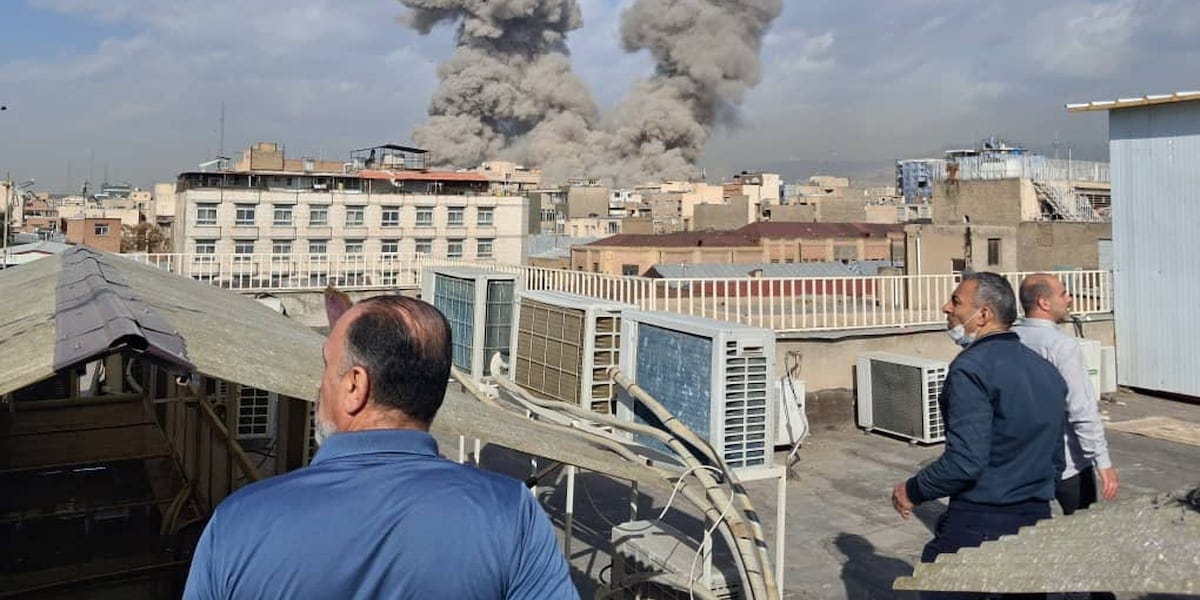
The meetings between Benjamin Netanyahu and Donald Trump were never ceremonial photo ops. People speculated about tone, body language, timing, and subtext. They wondered what was said behind closed doors. But anyone who has watched the arc of Middle East policy over the last decade understands something fundamental: strategic positioning at this level does not happen overnight. It is cultivated. It is gamed out. It is scenario-modeled years in advance.
What we are seeing now did not materialize in three days, so to speak, especially considering how deafening the silence about Iran was during the State of the Union. This has been incubating for a long time.
The real question is not whether Iran was going to be confronted. The question is what comes after confrontation.
When the word “regime change” is introduced into the public lexicon, it carries operational implications. Regime change is not an air campaign. It is not a decapitation strike alone. It is not a press conference. It is not even the elimination of a supreme leader. Regime change, in any historically grounded sense, implies territorial control, administrative displacement, and security dominance. That requires boots on the ground.
There is no serious historical precedent for a durable regime collapse without some form of ground enforcement—either domestic or external. The Gulf War stopped short of it. The 2003 Iraq invasion attempted it and paid for it. Libya removed a leader but left fragmentation. Afghanistan demonstrated the limits of prolonged occupation. If the objective in Iran is structural political transformation, then air superiority alone does not close that equation.
So what exactly is the operational plan? That’s the question nobody seems eager to answer in plain English. Maybe it’s time to rewatch Generation Kill—my favorite HBO miniseries created by David Simon and Ed Burns (The Wire is a close second also done by David Simon) , based on the book by embedded Rolling Stone journalist Evan Wright. That series didn’t just show combat; it dissected planning, improvisation, confusion, chain-of-command friction, and the fog-of-war reality that press briefings rarely capture. Plus, it showed that it was a hot mess.
And honestly, if events keep escalating, maybe Simon and Burns should consider the sequel spin-off called, Generation Epic Fuery.
Because if we’re going to talk about regime change in real-world terms, it’s not a montage set to dramatic music. It’s logistics, intelligence fusion, urban warfare doctrine, supply chains, stabilization strategy, and the inevitable clash between political objectives and battlefield realities.
If we’re talking about entering Tehran, about regime collapse, about decapitation strikes and power vacuums, then the lesson from Generation Kill isn’t about bravado. It’s about friction. It’s about how strategy on paper collides with reality on the ground.
And yes, the dialogue from that series still hits—because it was smart, biting, and brutally self-aware. Lines like, “We’re here to win hearts and minds,” delivered with layered irony, captured the tension between political messaging and battlefield pragmatism. Or when a Marine quips, “Gentlemen, we are about to embark on a campaign of maneuver warfare,” only for the next scene to reveal total operational chaos. The humor wasn’t cheap; it was diagnostic. It exposed the gap between PowerPoint planning and desert execution.
That’s the point.
If “Epic Fury” is more than a headline—if it’s the beginning of a structural shift in Iran—then someone, somewhere, has a binder thicker than a phone book outlining Phase I through Phase V. Air superiority is Phase I. Intelligence consolidation is Phase II. Regime destabilization is Phase III. But stabilization? Governance? Security handoff? That’s where history gets expensive.
In that sequel, Generation Epic Fuery, it wouldn’t be a chest-thumping war epic. It would be what they do best—hyper-detailed realism. Convoys navigating urban sprawl.
The writer embedded this time would have to be from Breitbart News and not Rolling Stone Magazine, the “left-wing liberal” media member: “Dear Frederick, thank you for your nice letter, but I am actually a U.S. Marine who was born to kill… Peace sucks a hairy asshole, Freddy. War is the mother-fucking answer.”
Regardless of my concept for a new miniseries, officers debating ROE language. Intelligence officers arguing over fragmented intercepts. Politicians declaring victory while field commanders quietly calculate risk exposure. Waiting only to never get (or it could have been too late by the time approvals happened) approval at killing Bin Laden and those types of logistics.
The brilliance of Generation Kill was that it respected the audience—and, honestly, it enlightened me. Growing up, I had the misguided impression that Marines were just “grunts” or “jarheads,” not particularly intellectual or articulate because of course after all, I get my information from movies and TV shows. Therefore, that stereotype couldn’t have been more wrong. The Marines portrayed in Generation Kill were sharp, strategic, self-aware, and often remarkably articulate when bored and even when under pressure.
The series also trusted viewers to handle complexity. It didn’t pretend war was clean or orderly. It didn’t suggest that every command made perfect sense. Instead, it showed highly capable professionals operating within imperfect systems, navigating confusion, hierarchy, and human error while still executing their mission.
And that’s exactly what’s missing from the current public conversation: specificity.
If the goal is nuclear deterrence, say it clearly and define success metrics. If the goal is regime change, acknowledge that regime change historically requires physical presence, not just precision munitions. If there are no boots planned, then explain how the vacuum fills itself. Revolutions do not self-organize into pro-Western democracies by default.
Plus, it’s not like the Islamic Revolutionary Guard Corps is some lightweight force you can ignore or “sneeze at.” The IRGC is one of the most powerful and deeply entrenched military–political institutions in Iran, operating alongside, but separate from, the country’s regular army. It has its own ground forces, navy, air capabilities, intelligence network, and elite units like the Quds Force—making it a comprehensive defense and power-projection force all on its own.
Estimates of its active personnel generally fall between roughly 125,000 and 190,000 fighters—and that doesn’t even count the larger Basij paramilitary network that reports to the IRGC, which can mobilize tens or even hundreds of thousands more in times of crisis.
That means if any internal uprising were to face the IRGC directly, it wouldn’t be an amateur militia versus a shell-shocked force. It would be organized, seasoned, and ideologically committed troops defending their regime and their communities. Even with internal fractures and leadership losses from strikes, the IRGC remains a deeply embedded power structure that would be extremely difficult to overcome without a clearly defined strategy and significant operational commitment.
In short: pushing into Tehran or trying to rout the Revolutionary Guards is not a simple “walk-in moment.” They are structurally capable, numerically significant, and doctrinally disciplined enough to make any such operation far more complex and costly than headlines suggest.
The difference between a headline and a plan is about 10,000 pages of operational detail.
So yes, maybe rewatching Generation Kill is useful—not because war is entertainment, but because it reminds us that military action is never as clean, simple, or linear as a podium speech makes it sound. If we’re serious about outcomes, then the conversation has to mature beyond branding exercises like “Epic Fury” and into something far more specific: objectives, end states, and who exactly holds the ground when the smoke clears.
That is the tension emerging in the briefings. At the press conference surrounding what is now being branded “Epic Fury,” Defense Secretary Pete Hegseth emphasized capability, precision, readiness, assets deployed, tonnage delivered, and strategic superiority. The language was saturated with metrics. What it did not saturate was articulation of end-state architecture.
An exit strategy question surfaced almost immediately. That alone tells you something. When journalists jump directly from preparation to departure, it signals a vacuum in the middle. You cannot coherently explain how you are leaving unless you have defined what you are staying for.
And yet the talking point keeps circling back to one anchor: Iran cannot possess a nuclear weapon.
That is a tactical justification. It is not a political blueprint.
We should be honest about something else. This debate is not new. The phrase “bomb, bomb, bomb Iran” sung to the tune of “Barbara Ann” by John McCain happened nearly two decades ago. The rhetoric around preemption, deterrence, and containment has been cyclical since I was a kid in 1979. The Islamic Revolution, the hostage crisis under Jimmy Carter, the “Death to America” era—this has been a rolling geopolitical standoff for nearly half a century.
The difference now is structural alignment.
This is also not a broad NATO-style coalition. This is a bilateral axis of capability between the United States and an extremely fortified Israel. The Israeli military apparatus in 2026 is not the Israel of 1991. It is technologically layered, intelligence-integrated, and regionally embedded in ways that shift operational calculus. If Israel and Hezbollah escalate simultaneously like is happening as we speak today, the northern front becomes a corridor question. As Hezbollah materially backs Tehran, Israel has incentive to neutralize that flank before any sustained Iranian ground complication.
But again—if the mission is larger than strikes, who holds the terrain?
You cannot decapitate a regime and then rely on rhetoric to fill the vacuum.
There is also the oil variable. A sustained campaign against Tehran does not exist in isolation. The Strait of Hormuz is not theoretical. Global oil shipments are not abstract. Even early tremors in energy markets signal fragility. A broader Middle East escalation threatens shipping lanes, insurance markets, and futures pricing far more aggressively than Venezuela ever could. When the administration returned to office, one of its consistent talking points was price stabilization. A conflict that ignites energy volatility runs directly into domestic economic pressure.
So what is the trade-off model? National security gain versus macroeconomic destabilization? Is the administration prepared for $120 oil? $150 oil? Supply shock?
On Capitol Hill, the power struggle is procedural but real. Republicans hold a federal trifecta—White House, Senate, and House—but Democrats retain investigative leverage. Under the 1973 War Powers Act, minority members can force recorded votes. Figures like Ro Khanna and Jack Reed are arguing that congressional authorization is constitutionally required. Meanwhile, leadership figures such as Chuck Schumer and Hakeem Jeffries are demanding classified briefings.
This is not about stopping the strikes. It is about forcing public accountability.
The math is tight. A 53–47 Senate and a 220–215 House means a handful of defections can create narrative friction. Even if a War Powers resolution passes, a presidential veto stands as a barrier. But every vote becomes a record. Every record becomes a campaign line.
The political risk here is layered.
On one hand, supporters argue that the 2024 electoral outcome delivered a mandate for hawkish, America First foreign policy. On the other, critics warn about unilateralism and escalation without congressional buy-in. The minority cannot defund an active military operation easily—politically toxic and procedurally difficult—but they can force oversight.
And that oversight battle matters because history matters.
The 1991 Gulf War was decisive and contained. The 2003 Iraq invasion toppled Saddam Hussein but triggered prolonged insurgency and destabilization. Afghanistan demonstrated that you can win battles and still lose strategic patience. Those lessons are not partisan. They are empirical.
What sets the current moment apart is the targeted elimination of Iran’s supreme leadership structure. Reports indicate that Ayatollah Ali Khamenei was killed in coordinated strikes. That alone marks an unprecedented escalation. The decapitation model assumes that removing the apex creates implosion. But power vacuums are not predictable.
Look at the secondary reactions already unfolding.
In Pakistan, protests erupted in Karachi, Lahore, Islamabad, Peshawar, and Gilgit-Baltistan. Demonstrators attempted to storm U.S. consulates. Police responded with tear gas and batons. Casualties mounted. Regional spillover is not hypothetical—it is active. When a strike reverberates across sovereign borders, you are no longer managing a contained theater.
And then there is the internal American debate.
There is frustration among voters about transparency. When asked directly about objectives, the response circled back to nuclear prevention. When asked about boots on the ground, officials held operational details close. That is standard military protocol. No competent administration telegraphs troop movements. But strategic ambiguity has limits in a democracy.
People want to know the point.
Is the objective deterrence? Is it elimination of nuclear infrastructure? Is it regime collapse? Is it economic leverage? Or is it symbolic strength projection?
You cannot execute regime change from 30,000 feet. If there are no American boots planned, then either Israeli forces assume expanded presence or the assumption is that internal Iranian factions will seize control. If the latter, what is the post-collapse recognition policy? Who does Washington recognize? Under what terms?
These are not academic questions. They determine whether this becomes a short, decisive campaign or the opening chapter of a long entanglement.
There is also the ethical undercurrent that must be addressed directly. War cannot become a profit engine for insiders. The Iraq era created a generation skeptical of defense contracting incentives and reconstruction profiteering. If this campaign is about strategic security, it must remain that. The American public has little tolerance left for wars that enrich the well-connected while soldiers pay the cost.
And yet, there is a counterpoint worth acknowledging. The United States military apparatus today is not the caricature of past decades. It is technologically advanced, intelligence-integrated, cyber-capable, and globally responsive. Countless plots are disrupted before headlines ever print. Deterrence often functions invisibly.
We rarely hear about the near misses. We rarely hear about the prevented attacks.
So here we stand.
A bilateral U.S.–Israel operation that has reportedly decapitated Iran’s supreme leadership. Escalation risk with Hezbollah. Oil market tremors. Congressional procedural battles. Regional protests. Strategic ambiguity about end-state governance.
This is a hinge moment.
If the objective is simply nuclear disarmament, then the mission must be defined, limited, and measured. If the objective is regime transformation, then the conversation must mature into realism about occupation, stabilization, and succession.
History punishes vagueness.
And the markets, the Congress, and the public are all watching for the same thing: clarity.
Power projection is easy to announce. Sustained geopolitical architecture is harder to build.
The coming days will reveal whether “Epic Fury” is a contained strike doctrine—or the opening movement of something far larger.
Today at the Sunset Entertainment & Media Companies
Shelter (2026) arrives on Sunset with force, atmosphere, and emotional gravity—anchored by a commanding performance from Jason Statham that feels both classic and unexpectedly intimate
Live From The Vault Radio Show on Live Jam Presents the #1 Live Album of All Time — Top 50 Live Albums of All Time, as selected by the writers at Variety — #1 on the list — is the legendary Johnny Cash At Folsom Prison (1968)
Hunger as Punishment: How States Restrict SNAP Benefits for People on Probation — And Why Food Should Never Be a Tool of Control
Explore New Jersey / Sunset Daily News