Americans genuinely do not know this still exists. It is almost never talked about, most likely because it feels unbelievable.
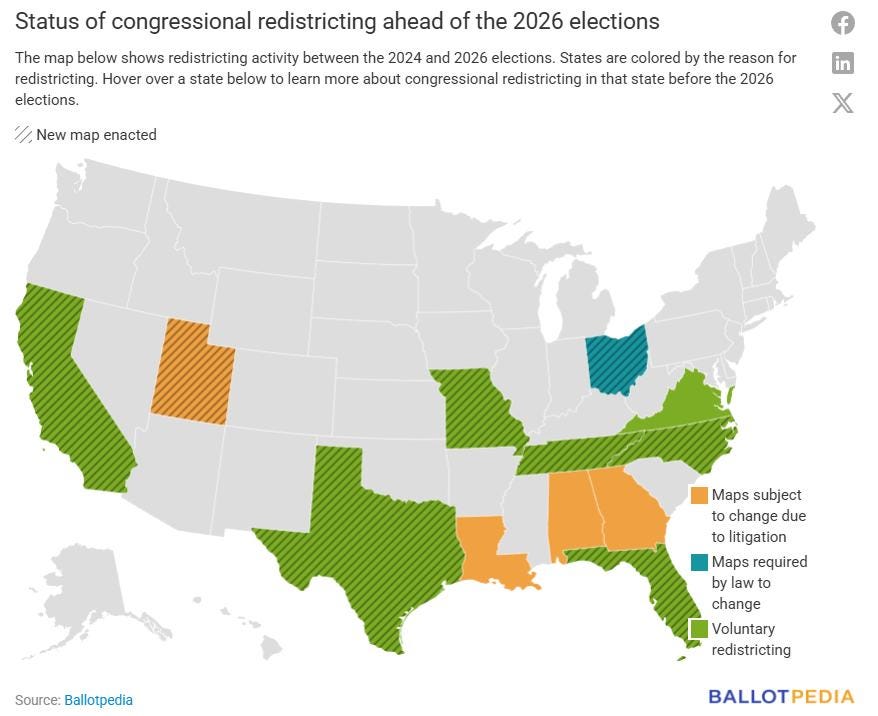
The modern Southern redistricting battle is usually discussed in sanitized political language. Analysts talk about “mid-decade map corrections,” “partisan balancing,” “electoral optimization,” or “district realignment.” Lawyers debate Section 2 of the Voting Rights Act. Political strategists discuss seat projections. Republicans aim to secure additional House advantages before the next election cycle. Democrats accuse legislatures of racial vote dilution. Everything becomes statistics, percentages, and litigation.
But outside the legal framing, something else is happening in public consciousness. More Americans are beginning to see these systems side by side. On one side are legislatures dismantling majority-Black districts across the South. On the other side are prison labor systems that still resemble the plantation economy those same states built their historical wealth upon. The deeper people look into both systems simultaneously, the harder it becomes to treat them as unrelated.
For many Americans, the moment of realization will not come through a law review article, a Supreme Court brief, or a cable news panel discussion about congressional maps. In many cases, it happens accidentally. For instance, a documentary camera turns down a rural Southern road toward a prison complex. The filmmakers may be focused on interviews, legal issues, or prison administration tied to another subject entirely. Then suddenly, the lens captures something unexpected off to the side of the road: rows of incarcerated men working cotton fields under armed supervision in the Deep South in what I believe was 2024.
That moment changes the entire conversation in the vehicle and certainly changed it for me personally, because most Americans genuinely do not know this still exists.