Corporations Are People, My Friend: When “Socialism” Becomes a Moving Target in American Power and Policy
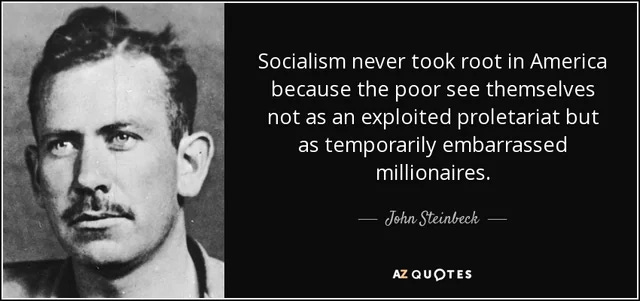
The modern political argument over “socialism” in the United States has become less about economic theory and more about rhetorical positioning. What was once a term tied to a defined framework, state ownership of the means of production, centralized planning, and redistribution, has been stretched, repurposed, and, in many cases, emptied of precision. In its place is a political shorthand used to describe anything from expanded healthcare access to regulatory policy. Beneath the noise of campaign language and partisan framing, a more consequential shift has taken place, one that cuts directly to the structure of the American economy itself.
The prevailing narrative from Republican leadership has long been that Democratic policy agendas represent a gradual slide toward socialism. The argument typically centers on the expansion of government programs, including universal healthcare proposals, student debt relief, subsidized education, and environmental regulation. These initiatives are framed as redistributive mechanisms that increase government dependency and diminish the role of private markets. That framing has been consistent for more than a decade, dating back to the political branding of the Barack Obama administration, when the label “socialist” was used frequently and often indiscriminately. At the time, that characterization strained credibility. The policies in question expanded regulation and public programs, but they did not meaningfully transfer ownership or operational control of private industry to the state. The last thing he was, by any reasonable definition, was a socialist.
That distinction matters. If socialism has a definable economic core, it is not simply about taxation levels or safety nets. It is about control. It is about who owns, directs, and ultimately benefits from the means of production. On that front, the current landscape presents a far more complicated and, to some critics, contradictory picture.
In recent years, the federal government’s role in private industry has evolved beyond regulation or stimulus. It has moved into direct participation, not as a referee but increasingly as a stakeholder, a financier, and in some cases a controlling entity. This is structural and it is happening in real time across sectors deemed strategically important, including technology, energy, manufacturing, and transportation.