
Corporations Are People, My Friend
I was told to take out my outline and bullet points, so I am posting it. I’m sorry. I thought I could dumb it down to make it easier to read, but people complained. So, thank you—and sorry—but again thanks. I am new to this so I will make mistakes. Thanks again!
Why the Pam Bondi hearing shows how Democrats are misusing one of the few tools they still have
From a campaign-strategy and political-science perspective, the February 11 oversight hearing involving Attorney General Pam Bondi offers a clear and uncomfortable lesson for Democrats: when a party does not control the governing institutions or the national media narrative, confrontational oversight hearings against a combative administration are far more likely to help the other side than to impose accountability.
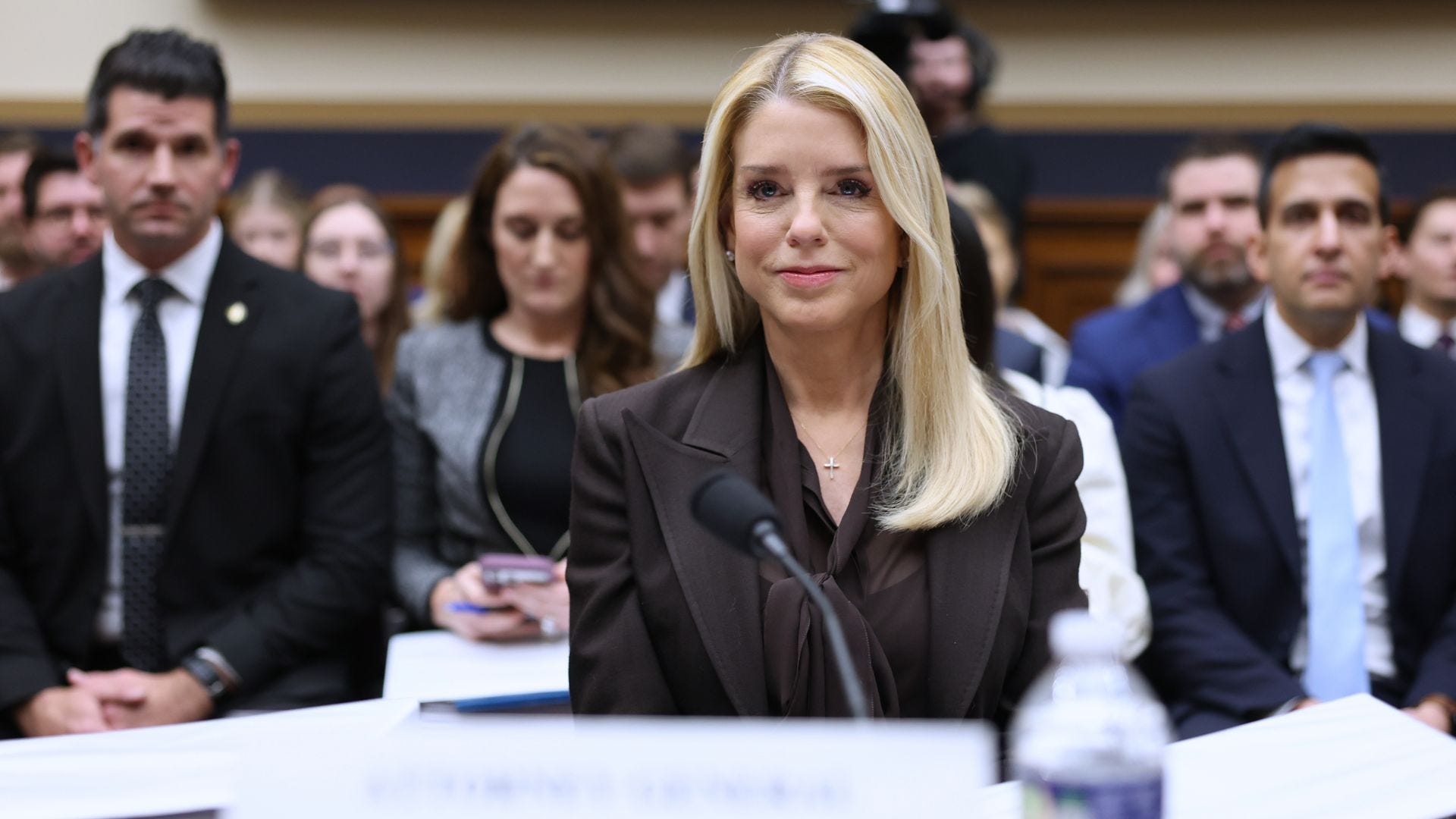
The hearing, conducted by the House Judiciary Committee, placed Democratic members in a structurally weak position from the outset. They were questioning a cabinet-level official who faces no electoral risk, no immediate legal exposure from congressional testimony, and no realistic threat of institutional sanction from the current Congress. At the same time, Bondi entered the room with a clear political audience already in mind.
Democrats are confusing moral protest with electoral strategy.
From a political-science standpoint, that is a failure of strategic prioritization — not merely messaging.
From a political-science standpoint, this created what scholars describe as asymmetric incentive alignment. Bondi benefited from confrontation and disruption. Democrats could only benefit if they were able to impose meaningful reputational or institutional costs. They were not.
The Bondi hearing is a textbook case of opposition agenda capture
The February 11 House Judiciary hearing with Pam Bondi illustrates a classic trap.
The “one-person audience” problem. That is straight out of modern executive-party alignment theory.
Bondi’s objectives were straightforward: demonstrate loyalty to Donald Trump, reinforce elite conflict narratives that energize partisan voters, generate short, viral confrontation clips, and avoid any substantive or binding commitments related to the handling of the Epstein files. In that environment, interrupting lawmakers, raising her voice, and launching personal attacks—most notably at Jamie Raskin—were not accidental missteps. They were audience-optimized tactics.
My problem is this: how could I have seen this coming from a mile away, from my seat, and yet every Democrat involved thought this would somehow be effective for the Epstein victims? It’s astounding that the Democrats thought this tactic would work to their advantage.
The much-discussed “opposition research” binder, theatrically referenced throughout the hearing, served the same purpose. It was not designed to inform the committee. It was designed to frame the encounter as a partisan fight rather than an accountability proceeding.
This dynamic reflects a broader and well-established phenomenon in executive–party alignment research: when a cabinet official is aligned with a highly personalized presidency, oversight appearances function less as institutional checks and more as performative extensions of party branding.
The deeper problem for Democrats is structural. They do not control the Department of Justice. They do not control the House agenda. They do not control Senate floor scheduling. They do not control the presidency. Under those conditions, congressional oversight does not operate as an enforcement mechanism. It operates as a signaling platform.
This is, in part, why the hearing helped Republicans more than Democrats. The biggest reason is messaging, which the Democrats are horrible at.
In practice, such hearings become media spectacles, partisan messaging vehicles, and base-mobilization tools—primarily for the governing party. That reality helps explain why this particular hearing produced extensive conservative media amplification while generating little durable leverage for Democratic lawmakers.
Research on competitive-district political communication shows that hearings are especially ineffective at persuading swing or low-information voters when four conditions are present: the official being questioned already has deeply polarized favorability; the forum is elite and procedural rather than public-facing; the message is adversarial instead of problem-solving; and the opposing party controls post-event framing. All four conditions applied here.
Once committee chair Jim Jordan publicly dismissed the hearing as political theater and defended Bondi’s conduct, the interpretive frame was largely set. By the time commentators such as Bill O’Reilly described Bondi’s performance as deliberate and strategically aggressive, the information battlefield had already been decided.
In effect, the hearing became a content asset for the governing party. And, remember, if the people in the GOP are saying something is bad, they are doing the exact same thing themselves.
The “projection” tactic is real
That is not unique to one party historically — but it is heavily used in high-conflict populist communication strategies.
In the current environment, Bondi’s rhetoric mirrors that model.
Several Democratic members attempted to frame Bondi’s responses as part of a broader pattern of rhetorical projection—what political psychologists often describe as defensive projection or moral inversion framing. In modern high-conflict political communication, repeated accusations of “weaponization,” “corruption,” and “anti-democratic behavior” are frequently deployed in advance to normalize future conduct, blur accountability signals, and weaken elite credibility filters.
The Epstein angle is structurally weak in hearings
Even if the underlying concern is legitimate, the Epstein files issue fails as a hearing-based accountability strategy because:
- it involves classified, sealed, and victim-protected material
- DOJ has procedural cover for redaction
- the official can always invoke privacy and ongoing review
So when members such as Jasmine Crockett attack the handling of survivors and transparency, the charge may resonate morally — but it does not translate into institutional leverage.
This is why the exchange produces outrage, not outcomes.
Bondi’s testimony followed that model closely, particularly in how she reframed questions about prosecutorial independence and transparency as partisan attacks rather than institutional concerns.
The hearing’s focus on the Epstein files further illustrates the strategic limitations of this approach. Even when the underlying concerns are legitimate, that subject is structurally weak as a hearing-based accountability tool. The material is deeply entangled with sealed records, victim-protection rules, and classification barriers. The Department of Justice has broad procedural authority to redact information and to invoke ongoing review.
As a result, when lawmakers such as Jasmine Crockett challenged Bondi on survivor treatment and transparency, the exchange produced moral condemnation but not enforceable outcomes. In political terms, it generated outrage without leverage.
Some Democratic activists and commentators argue that the party must respond by adopting the same confrontational style on display from Bondi. That instinct is understandable, but it is also strategically risky. Democratic coalitions are significantly more constrained by institutional norms, donor expectations, and media legitimacy standards than their Republican counterparts. When Democrats engage in similarly aggressive or norm-breaking tactics, they are more likely to alienate moderate voters, fracture elite coordination, and trigger internal backlash—without gaining equivalent mobilization benefits among persuadable constituencies.
The most compelling critique of the Bondi hearing is therefore not stylistic. It is logistical.
Every hour spent preparing for and executing a symbolic confrontation is an hour not spent on candidate recruitment, district-specific message development, turnout infrastructure, voter-file analytics, ballot-access litigation, and state-level legislative contests. From a campaign-resource standpoint, the marginal electoral return on this hearing was close to zero—an assessment that would be broadly accepted among professional political strategists.
If the Democratic Party were approaching the 2026 cycle from a strictly strategic perspective, the pivot would be clear. Symbolic confrontational hearings would be limited to situations that directly support litigation, subpoena enforcement, or regulatory intervention. Let alone basic Political Science. Institutional conflict would shift away from Capitol Hill and toward state attorneys general, election-administration litigation, and ballot-access protections, where real friction can still be created. National messaging would concentrate almost exclusively on voter-facing outcomes—prices, health-care access, disaster response, infrastructure delivery, education funding, housing, and insurance markets—rather than elite misconduct narratives.
Most importantly, the party would treat 2026 as a field-first election cycle. Democrats cannot legislate their way out of minority status. They can only organize their way out.
Every hour spent on a hearing like this is an hour not spent on:
- candidate recruitment
- district-specific messaging
- turnout infrastructure
- voter-file modeling
- legal protection of ballot access
- state-level legislative contests
From a campaign-resource perspective: the marginal electoral return of this hearing was near zero.
That is not a controversial claim among professional strategists.
The central diagnosis emerging from the Bondi hearing is therefore blunt. Democrats are increasingly substituting moral protest for electoral strategy. In a unified government environment, protest primarily benefits the party that already controls power. Elections benefit the party that does not.
The February 11 hearing allowed a hostile official to dominate the spectacle, satisfy her primary political audience, and leave without consequence. From a political-science perspective, that outcome reflects a failure of strategic prioritization, not merely a messaging problem.
If Democrats are not devoting the overwhelming share of their institutional energy to winning elections now, they are misallocating the most scarce resource they have left: political capital.
The last argument I will make about winning elections first and holding hearings and impeachments later is this: when Michelle Obama said, “When they go low, we go high,” at the convention, that approach simply does not work right now. It did not work last work. It does not work vs that GOP messaging machine. I understand that it is not good to act that way, but you still have to know your audience. Democrats need to realize that many Americans are not paying close attention, and most people are largely clueless about how they even vote. Therefore, wyhen Bam Bam yells two words, they take to it because its easy.
That is honestly why the phrase “Epstein Class” is working. It’s three syllables, quick, and to the point—and even a dumbass like me gets it. Unfortunately, Democrats need to dumb themselves down in order to win an election.
The “get in the gutter” instinct is emotionally understandable — but strategically dangerous
My frustration is real — but the “fight dirty” solution is not cost-free.
Oversight hearings against a hostile, media-savvy administration are electorally counterproductive when you do not control narrative infrastructure.
That is a defensible, mainstream position in campaign strategy literature.
From a political-science standpoint, that is a failure of strategic prioritization — not merely messaging.
They cannot govern their way out of minority status.
They can only organize their way out.
If Democrats are not using nearly all institutional energy to win elections right now, they are misallocating scarce political capital.