
Corporations Are People, My Friend
A profound shift is underway inside American political and economic thought. Long viewed as a defining element of “tough on crime” policy, the death penalty is now facing growing scrutiny from an unexpected source: conservatives, libertarians, and Republican leaders who argue that capital punishment conflicts with core principles of limited government, fiscal responsibility, and the sanctity of life.
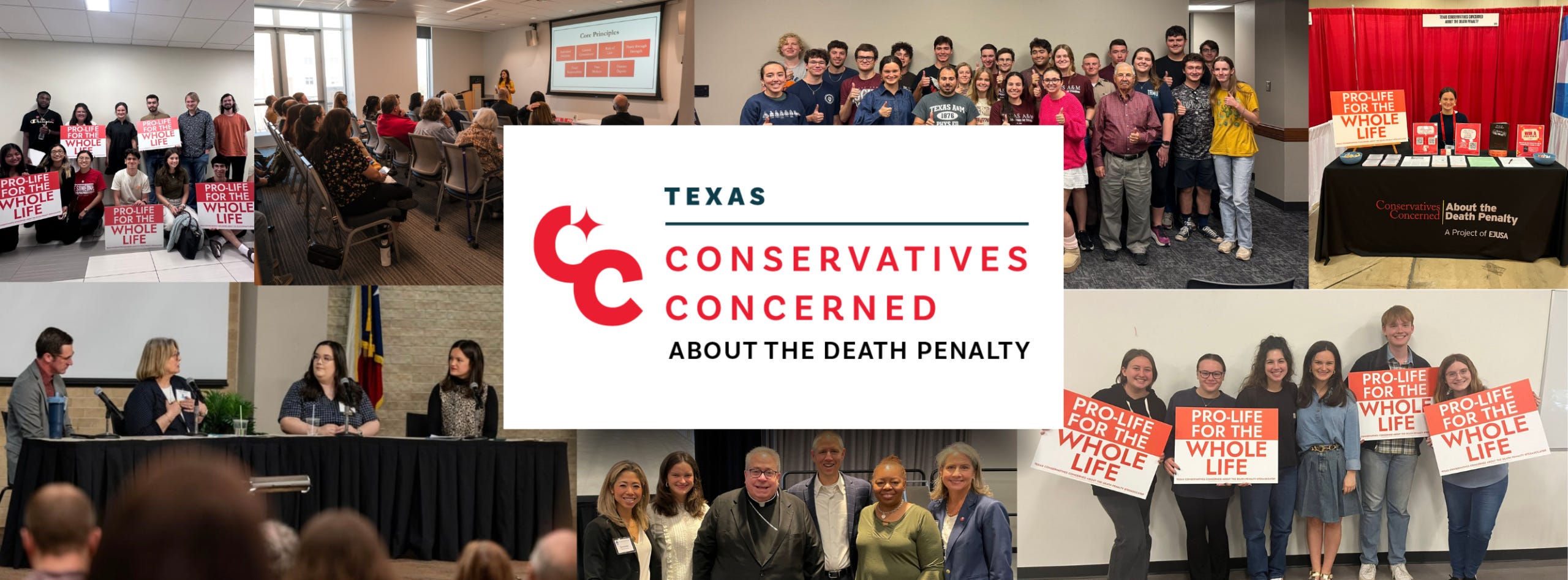
This week’s Corporations Are People, My Friend feature explores the expanding conservative movement against the death penalty, the economic realities of private prison systems, and the broader question shaping the future of criminal justice: what does justice look like when policy, profit, and principle collide?
As public opinion shifts and political momentum builds, the debate over capital punishment is evolving from a moral question into a complex discussion about governance, economics, rehabilitation, and the role of incarceration in modern society.
The New Conservative Movement Against Capital Punishment. For decades, support for the death penalty has been closely associated with conservative politics. That alignment is now changing.
Core Conservative Arguments Against the Death Penalty and Conservative opposition generally centers on four thematic pillars:
- Distrust of Government: Many argue that if the government cannot be trusted to manage basic services effectively, it should not be granted the ultimate power over life and death.
- Fiscal Responsibility: Capital cases are significantly more expensive than life-without-parole sentences due to lengthy appeals and specialized legal requirements.
- Pro-Life Values: Activists emphasize a “consistent life ethic,” arguing that the state taking a life is fundamentally incompatible with valuing the sanctity of human life.
- Risk of Irreversible Error: The potential for human error in the justice system—and the fact that 200 people have been exonerated from death row since 1973—is a major concern for those wary of state-sanctioned killing of the innocent.
A growing coalition of conservative thinkers, activists, and policymakers argue that the death penalty contradicts core conservative values. Organizations such as Conservatives Concerned About the Death Penalty have helped lead this movement, mobilizing political and social conservatives to re-examine capital punishment through the lens of constitutional restraint and fiscal accountability.
Their position is rooted in four primary principles.
Distrust of Government Power. Many conservatives argue that if government institutions struggle to administer complex systems fairly and efficiently, they should not possess the irreversible authority to take human life. The possibility of error within the justice system raises fundamental concerns about state power.
Fiscal Responsibility. Capital punishment cases often require decades of appeals, specialized legal proceedings, and complex court oversight. These costs frequently exceed those associated with life imprisonment without parole, creating a major fiscal argument against executions.
Pro-Life Philosophy. Some conservative activists emphasize a consistent ethic of life, arguing that the state taking a life conflicts with broader commitments to protecting human dignity.
Risk of Irreversible Error. Wrongful convictions remain a central concern. The possibility that innocent individuals could be executed has driven growing skepticism across political lines.
Together, these arguments represent a significant ideological shift — reframing opposition to the death penalty as a conservative position rather than a partisan divide.
Growing Political Momentum Across the United States. The political impact of this movement is already visible.
Republican lawmakers at the state level have increasingly supported repeal efforts or execution moratoriums. Conservative advocacy has contributed to policy changes in multiple states and continues to influence legislative debate across traditionally conservative regions.
While the official Republican Party Platform historically supports the death penalty, state-level sponsorship of repeal bills by Republicans has increased six-fold over the last decade.
- State Impact: Conservative support has been instrumental in death penalty repeals or moratoriums in states like Colorado, New Hampshire, and Virginia.
- Active Campaigns: Active conservative-led repeal efforts are currently underway in “red” states such as Ohio, Wyoming, Utah, and Kansas.
- Notable Figures: Prominent conservatives who have expressed concerns or opposition include:
- Ron Paul, former Congressman and GOP presidential candidate.
- Richard Viguerie, conservative pioneer and advisor to Ronald Reagan.
- Mike DeWine, Republican Governor of Ohio, who has maintained an unofficial moratorium on executions.
- Michael Steele, former RNC Chair.
Public opinion reflects this shift. Support for the death penalty has declined significantly over the past decade, with younger voters and fiscally focused policymakers questioning its effectiveness as a deterrent and its long-term cost to taxpayers.
This changing political landscape suggests that criminal justice policy is entering a period of structural reconsideration.
The Economics of Capital Punishment and Incarceration. Beyond morality and public policy lies another critical dimension: economic reality.
Capital punishment represents one of the most expensive elements of the criminal justice system. The legal complexity, extended appeals process, and administrative costs create substantial long-term financial burdens.
In contrast, life imprisonment produces ongoing operational costs but avoids the extensive legal infrastructure required for executions. This economic comparison has intensified debate among policymakers and analysts examining the efficiency of criminal justice spending.
The conversation becomes even more complex when considering private prison systems and institutional financial structures.
Private Prisons and the Incentive Structure Debate. The relationship between incarceration and economic incentives has long been controversial. Critics and analysts frequently examine how prison systems — particularly privately managed facilities — structure financial models around inmate populations, operational costs, and institutional sustainability.
Within this framework, some observers question whether capital punishment conflicts with economic incentives tied to long-term incarceration. The argument suggests that extended incarceration generates ongoing institutional activity, including operational labor systems, commissary purchasing, and long-term facility management.
This perspective raises broader questions:
- How do correctional institutions balance cost, security, and rehabilitation?
- What role should economic considerations play in sentencing policy?
- Can financial incentives influence justice outcomes?
- Should rehabilitation and productivity play larger roles in incarceration models?
These questions sit at the intersection of economic theory, ethics, and criminal justice policy.
Rehabilitation, Labor, and Institutional Structure. American correctional systems already operate structured work programs inside prison facilities. In many jurisdictions, incarcerated individuals participate in institutional maintenance roles, skilled trades, educational support services, and industrial production.
These programs serve multiple purposes:
- Maintaining facility operations
- Providing structured activity and routine
- Supporting institutional stability
- Offering vocational skill development
- Reducing behavioral conflict within facilities
Inmates serving life sentences may also participate in mentorship roles, educational programs, or institutional jobs that help maintain prison infrastructure.
The broader policy debate centers on how rehabilitation, productivity, and accountability should function within a system designed for long-term confinement.
Life Without Parole and the Structure of Permanent Sentencing. Life Without Parole (LWOP) represents one of the most severe alternatives to capital punishment. Individuals serving such sentences typically remain incarcerated for life, with no pathway to release regardless of behavior.
While these individuals cannot shorten their sentences, they may still receive institutional privileges for good conduct, including:
- Expanded communication access with family
- Improved housing conditions
- Participation in educational programs
- Institutional job assignments
- Mentorship opportunities
These systems aim to maintain order and stability within long-term correctional environments.
The existence of LWOP raises broader policy questions about punishment, rehabilitation, and the purpose of incarceration itself.
Justice, Accountability, and Social Impact. The debate over capital punishment ultimately reflects competing visions of justice.
Some policymakers emphasize retribution and deterrence. Others focus on rehabilitation, fiscal efficiency, or the risk of wrongful conviction. Many seek a balance between accountability, public safety, and institutional fairness.
The emerging conservative opposition to the death penalty illustrates how criminal justice policy continues to evolve alongside changing political, economic, and ethical frameworks.
The Future of Criminal Justice Policy. The growing conservative critique of capital punishment signals a broader transformation in American policy thinking. Issues once defined by partisan alignment are now being reconsidered through new lenses — fiscal efficiency, institutional accountability, and constitutional restraint.
As discussions about incarceration models, rehabilitation systems, and economic structures continue, policymakers face fundamental questions:
- What is the purpose of punishment?
- What role should government play in matters of life and death?
- How should justice systems balance cost, accountability, and human dignity?
- What reforms best serve public safety and social stability?
These questions will shape the next era of criminal justice reform.
A System at a Crossroads. The American criminal justice system stands at a critical juncture. Political coalitions are shifting. Public opinion is evolving. Economic realities are reshaping policy discussions. Traditional assumptions about punishment and rehabilitation are being challenged.
The conservative movement questioning the death penalty represents more than a policy dispute — it reflects a fundamental reassessment of power, responsibility, and justice in modern society.
Here is my post and article from the Sustainable Action Now website:
Earlier this week, Florida Gov. Ron DeSantis signed a death warrant for Michael Lee King, who was sentenced to death for the 2008 abduction and murder of Denise Amber Lee—a horrific crime that ended a young woman’s life and devastated her loved ones. King’s execution is scheduled for March 17, 2026, at Florida State Prison. Sign The Petition Now.
For Sustainable Action Now, this is not a story about excusing violence or minimizing loss. It’s a story about what “justice” is supposed to accomplish—and whether state executions deliver safety, healing, or accountability, or whether they compound trauma and expand government power in ways that ultimately undermine community wellbeing.
At the same time, the political ground under the death penalty is shifting in unexpected ways. A growing coalition of conservatives, libertarians, and Republican leaders is increasingly questioning capital punishment—not from a soft-on-crime posture, but from core right-of-center concerns: government overreach, fiscal waste, and irreversible error.
This moment sets up a wider national conflict: as parts of the Trump political ecosystem push to accelerate executions and narrow barriers to carrying them out, the conservative anti-death-penalty movement is sharpening its argument that the state should not hold (or use) the ultimate power.
And that clash is now playing out in Florida.
What Happened in Florida and Why It Matters Now
The case at the center of this renewed public attention is profoundly painful. Denise Amber Lee’s murder remains one of Florida’s most heartbreaking crimes of the last generation, and any serious conversation must begin by acknowledging the permanent harm done to her and her family.
But the signing of a death warrant does more than schedule a date. It reactivates an entire machinery—legal, political, institutional, psychological—that touches far more people than the condemned person alone. Executions engage corrections staff, attorneys, judges, law enforcement, witnesses, media, and the families of both victims and defendants. That’s one reason why many advocates argue the death penalty doesn’t “close” trauma—it often reopens it, sometimes repeatedly, for years.
Florida’s death warrant also lands in a national environment where executions and execution methods have become newly contentious—legally, medically, and morally—and where public support has continued to erode even as some elected officials push harder in the opposite direction. Sign The Petition Now.
The Sustainable Action Lens: Safety, Healing, and the Long-Term Health of Communities
At SAN, sustainability isn’t limited to emissions and ecosystems. It’s also about whether our systems reduce harm over time—or institutionalize it.
A sustainable justice system should aim to:
- Protect the public effectively
- Honor victims without exploiting their suffering
- Reduce violence, rather than normalize it
- Use public funds responsibly
- Prevent irreversible failures in life-and-death decisions
The death penalty, critics argue, struggles on every one of these measures.
Even among people who believe severe punishment is warranted, there’s a serious question: does an execution actually make communities safer, or does it function as a ritual of retribution that diverts attention (and resources) from what reduces harm in the real world—prevention, rapid response, effective investigation, victim services, and evidence-based corrections?
The Quiet Conservative Revolt: Four Pillars Driving Opposition to the Death Penalty
What’s changing the conversation—especially in red states—is that opposition is no longer confined to progressive circles. Conservatives Concerned About the Death Penalty (often abbreviated as CCATDP) has helped organize a distinctly right-of-center critique that is increasingly influential in state-level debates.
Here are the four arguments that are moving the needle:
1) Distrust of Government: “If government can’t do the basics, why trust it with life and death?”
This is the philosophical core for many conservatives. If people distrust bureaucracy, incompetence, politicization, and institutional bias in other areas, granting the state the ultimate, irreversible power becomes a contradiction in principle.
2) Fiscal Responsibility: Capital cases cost more than life without parole
Capital punishment is not the “cheap” option. The legal complexity required (appeals, specialized counsel, heightened procedural requirements) typically drives far greater costs than life sentences. Many conservatives argue: if the outcome is not meaningfully different for public safety, the price tag is unjustifiable.
3) Pro-life consistency: A “consistent life ethic”
A growing segment of right-of-center advocacy frames opposition as consistent with valuing human life—even when that person has committed a terrible crime. This doesn’t mean ignoring victims; it means arguing the state should not answer killing with killing.
4) Irreversible Error: Innocence is not theoretical
Since 1973,
Public Opinion Is Shifting—Even as Political Pressure Intensifies
While the death penalty remains politically popular in some quarters, overall U.S. support has dropped to a
What an Execution Can’t Do—and What Communities Actually Need
Supporters of the death penalty often talk about closure and justice. But closure is not a policy outcome; it’s a human process. Many families find peace through remembrance, community, and support. Others experience renewed suffering through the prolonged churn of capital litigation and execution scheduling.
- immediate and long-term trauma-informed services
- stable funding for victim advocacy
- accountable, competent investigations and prosecutions
- policies that reduce violence upstream
A sustainable justice approach prioritizes interventions that measurably reduce harm—rather than symbolic actions that risk widening it.
A Florida Flashpoint in a National Reassessment
The DeSantis death warrant for Michael Lee King is likely to intensify public debate in Florida and beyond—not only because of the gravity of the underlying crime, but because it arrives at a moment when the death penalty is being re-litigated in the public conscience.
How SAN Readers Can Engage Constructively
Sustainable Action Now exists to promote action that reduces harm and strengthens communities over time. If this issue moves you—whether your priority is public safety, victims’ rights, government restraint, or the moral direction of policy—engagement matters when it’s grounded in facts, dignity, and a commitment to outcomes that actually improve lives.
The Defining Question
Denise Amber Lee deserved to live. Her loved ones deserved a future untouched by the worst kind of loss. Nothing can restore what was taken.
As the debate continues, one thing remains clear: the future of criminal justice in America will be defined not only by law, but by evolving ideas about governance, accountability, and the value of human life.