Anger is an easy currency in American politics. It is loud, it spreads quickly, and it creates the illusion of engagement. But anger, on its own, does not win elections, change corporate behavior, or protect vulnerable populations—human or otherwise. This realization hit me again this week, uncomfortably and unexpectedly, during a real-life conversation that pulled me out of the familiar feedback loop of political outrage.
Like many others, I spent the week watching Democrats cycle back through the January 6 hearings, leaning heavily on moral condemnation and historical warning signs. And while none of that is wrong, it is also no longer sufficient. The problem is not that accountability is unnecessary—it is that outrage without a forward-facing platform has become a substitute for governance. I found myself yelling into the void on social media, then carrying that same energy into an actual phone conversation, assuming that everyone sees the world the same way I do.
They do not.
When I criticized Democrats for being ineffective at winning elections and incoherent in their messaging, the response I got—from a very traditional, Trump-aligned Republican—stopped me cold. His argument was not about Trump’s behavior, rhetoric, or legal exposure. It was about policy. Platforms. Outcomes. And I realized, in that moment, that I had not seriously evaluated Democratic policy positions in months—maybe longer.
That is not a personal failure. It is a systemic one.
When Messaging Replaces Substance
Democrats have grown overly dependent on the assumption that moral clarity automatically translates into electoral success. It does not. Voters—rightly or wrongly—vote on tangible outcomes: immigration enforcement, economic stability, healthcare access, and perceived competence. Simply pointing out how dangerous or reckless Donald Trump is does not answer the question voters are actually asking: What are you going to do differently, and how will it affect my life?
Immigration is a perfect example. Regardless of where one falls ideologically, enforcement policy under Democratic administrations has often been chaotic, opaque, and poorly communicated. Agencies like ICE have become symbols of cruelty and incompetence rather than lawful administration. When enforcement looks like unchecked aggression—like the worst high school kid being handed a badge—it alienates voters across the spectrum. And Democrats, instead of confronting that reality head-on, often retreat into defensive silence.
Silence is not a strategy.
Corporate Responsibility Extends Beyond Humans
This is where the conversation took an unexpected turn. I found myself lost for words again in a public setting, drifting—for reasons I still do not fully understand—toward vaccines and even crediting Trump for his role in Operation Warp Speed. At that point, I had to assume that this was part of where the political narrative becomes deeply uncomfortable for Democrats.
In my world where if we are serious about the idea that corporations are “people” or individuals I should say (my friends)—with rights, responsibilities, and legal protections—then we must also be serious about the systems they operate within. That includes how corporations, research institutions, and government agencies work and how they should not plunder the Earth or kill things indiscimanatly or just acting with no regard for the living things.
On this issue, the record is inconveniently lopsided.
The Trump Administration and Animal Welfare: An Uncomfortable Reality
Setting aside the noise, the rhetoric, and the self-enrichment that defined much of Donald Trump’s presidency so far, the administration did take concrete steps—particularly in its later years and policy extensions—that materially advanced animal welfare in ways Democrats have largely ignored.
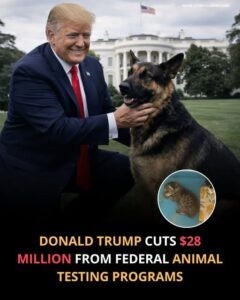
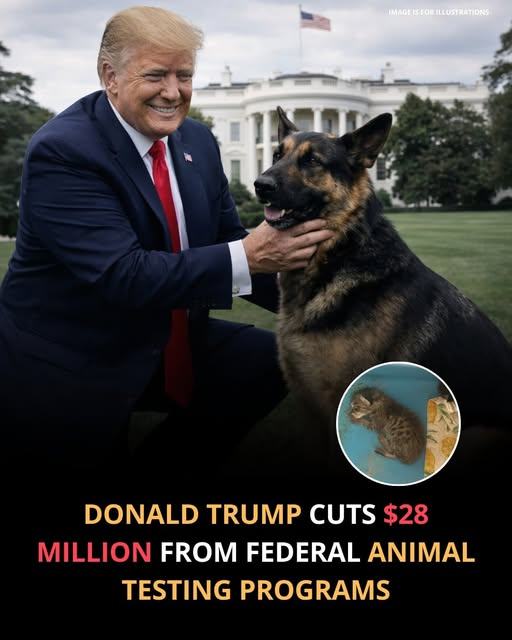
Between 2025 and 2026, the administration advanced initiatives aimed at phasing out mammalian animal testing, particularly at the Environmental Protection Agency, with a long-term goal of eliminating it entirely by 2035. The National Institutes of Health began shifting funding priorities toward human-based and non-animal research models, acknowledging what scientists and ethicists have argued for years: animal testing is often inefficient, outdated, and ethically indefensible.
PETA, an organization not known for casual praise of Republican administrations, publicly applauded these moves.
The Department of Defense followed with a ban on live-animal use in military trauma training, ending a practice that subjected animals to gunshot wounds and explosives under the guise of preparedness. This change was codified through updates to the National Defense Authorization Act and marked a major shift in military ethics.
Additionally, the administration established a federal animal cruelty strike force, assigning dedicated prosecutors in every state to pursue abuse cases more aggressively. That is not symbolic policy. That is structural enforcement.
These actions reflect a recognition—however imperfect—that corporate and governmental responsibility does not stop at the human boundary.
Where the Record Is Mixed—and Why It Still Matters
None of this erases the administration’s rollback of key Endangered Species Act protections, including the removal of the automatic “blanket rule” for threatened species. Those changes introduced regulatory flexibility that conservationists argue weakened protections for animals like manatees and other vulnerable wildlife.
Nor does it excuse documented declines in enforcement of the Animal Welfare Act and the Horse Protection Act during the same period.
It also known about their willingness to allow their corporate friends to dump waste into rivers once again.
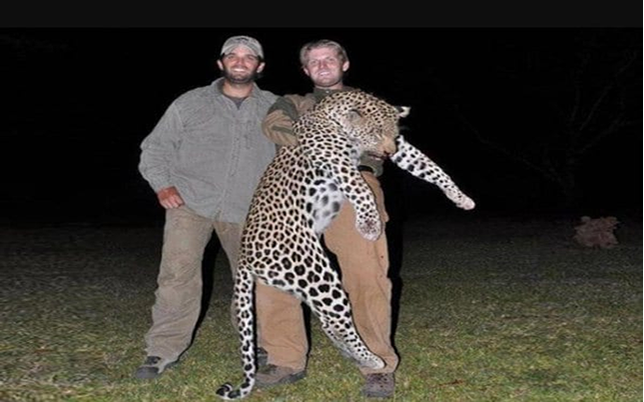
I also understand the issue with his kids’ trophy hunting, which I detest and have even fought against at Sustainable Action Now.
But policy is not evaluated in absolutes. It is evaluated in outcomes and priorities. And the uncomfortable truth is this: animal welfare and wildlife protection have never been a serious priority for Democratic leadership.
When laboratory animals escape, it becomes a media punchline. When testing facilities are exposed, it is treated as an isolated incident rather than a systemic failure. It was not a joke that they had to round up 21 or 14 Monkeys to go back to get tested on every minute of the day when its not necessary to use animals or wildlife today. It is counter productive to use them.
Regardless, unless the issue is unavoidable—something sensational and impossible to ignore—it rarely makes it onto the Democratic policy radar.
OK. I am not sure why I am speaking about animal and wildlife welfare when i want to be speaking about Policies.
Let’s get Back On Track—Why Democrats Keep Losing—and Why Responsibility Starts With Policy, Not Outrage
The position I keep coming back to—even when it makes me uncomfortable—is this: much of what we are living through politically is the Democrats’ fault. Not because they are evil, corrupt masterminds rigging the system, but because they are structurally incapable of confronting how power actually works in modern America.
That distinction matters.
The system is rigged. But it is not rigged in the way cable news or the GOP today wants you to believe. It is not the result of some diabolical, hyper-competent Democratic machine pulling strings behind the scenes. If Democrats were capable of that level of coordination, they would not be losing elections they should be winning. The so-called Cigarette Smoking Man was not a Democrat, so to speak—and have you ever seen Mitch McConnell, for God’s sake? Or Dick Cheney, who reportedly survived six or seven heart attacks, which, given that lifestyle and deaths alloed during his administration, is not exactly surprising. The Democratic Party and its cast of characters are known for windsurfing, getting oral sex from 19-year-old interns, and generally being pussies when Trump can grab women by the pussies in ways that actually help his candidacy.
However today, the reality is simpler and more damaging: Democrats are bad at translating moral outrage into governing power.
Running Against Trump Is Not a Platform
I see what Donald Trump is. I see the corruption, the personal behavior, the vulgarity, the allegations, the grift, the aesthetics-first obsession with wealth creation without accountability. I see a system that allows billions to be generated and shielded without meaningful checks or risk, while ordinary people are told to tighten their belts and be patient. I never had to pay attention to him because he was never on the Los Angeles news, which is where I spent much of my adult life.
But seeing what Trump is has never been enough to beat him.
Impeachments did not work. Sexual misconduct allegations did not work. Constant reminders of what he said or did not work. None of it worked because Democrats mistook exposure for persuasion. They assumed that if voters knew, voters would act.
That assumption is wrong.
Voters do not vote against abstractions. They vote for outcomes. And Democrats have spent decades running against something instead of for something, mistaking opposition for identity.
This, in part, brings me back to policies, which I am not even sure what they are today. What are the policies people actually care about today? Because that shut me up. We now have to go over every policy, because my feeling is that if something is a talking point, then it is a talking point. It exists as a way to shut us clueless liberals up or to see if whomever is capable of taking on the next step which is a mere response to it. If I knew the policies and how America feels about them, I could have—and should have—been able to respond in a more astute way. Instead, I started talking about vaccines, for God’s sake.
The Trap of the Media Bubble
After that conversation, I started to wonder about any Democratic policies—what they actually stand for today—I did not just struggle to answer. I realized how long it had been since I even asked the question. Forget the Democratics. What am I saying? What are the Policies that are a part of or should be of any General Election? I had fallen into the same trap as millions of politically engaged Americans: reacting to what I see rather than interrogating what is being offered. Then, to be like Bam, Bam, the price of eggs are too high (so to speak) or look at them kill people in the street (so to speak).
That trap is reinforced by media ecosystems that thrive on outrage cycles. I am already angry. I was born angry. However, we are still trained to be angry, not informed and this is coming from me that insists i am not persuaded by media people. To recognize villains, not platforms. To consume politics as spectacle rather than as a ledger of tradeoffs is also my issue I realized this week.
I have been voting against things now for decades. I voted for Reagan which was for Regagan. I drifted Green which is another way of saying we voted against the norm. I became functionally Democratic not because the party aligned with my values, but because third parties were blamed—often unfairly, sometimes correctly—for electoral collapse. However, that set up was always for the Democratic candidate to always move forward. To this day, being “green” in America means being politically homeless and so we have to latch on to the Democratic Party to help in that regard.
And yet, the older I get, the clearer it becomes: voting against something is not a sustainable political identity.
Corporate Responsibility Without Policy Is Theater
This column is called Corporations Are People, My Friend for a reason. If corporations are granted personhood—rights, protections, and political influence—then responsibility must be applied with the same rigor.
That means policy.
Not slogans. Not vibes. Not outrage.
Corporate responsibility intersects with tax law, labor standards, environmental regulation, animal welfare, consumer protection, healthcare access, housing affordability, and technological oversight. These are not niche concerns. They are the architecture of daily life.
And yet, Democrats routinely fail to explain—clearly, repeatedly, and simply—what they believe corporations owe society in exchange for power.
Hell, I lost track of that, but in my defense, I am acting like a typical corporation today. I cannot have anything or anyone in my life unless it helps the business I run in some way. I have no friends. I have not dated women in a long time. Forget any real relationship. The business must come first, and I now also understand the trickle-down theory because after I make money, I can spread it out accordingly. It took me years to start acting this way, when before a band, partying, and everything else came ahead of my business.
Maybe I am a GOP’er in a sense and do not even know it.
Why Policies Matter More Than Ever
Below, I did a search using Google—or maybe Gemini—to try to pull up every major policy ever created by the United States. I took a quick glance and also pulled up specific, more detailed policies that are currently on the books today. Again, this was a quick review, but I copied and pasted the material so we would have it here for reference. I want to spend time dissecting these policies to see who stands where and which side everyone is really on.
Therefore, when I am faced with someone saying, “Democratic policies are why they lose,” dismissing that claim outright is intellectual laziness. The correct response is to ask: Which policies? Why? And how do voters experience them? Or, even though it is daunting, learn them myself which is now my goal over the next few weeks. Remember I do have a day job so to speak so it has to be done when I have that time.
Politics in 2026 is not short on policy. In fact, it is drowning in it.
Across the current legislative landscape, Americans are confronted—often without explanation—with policy decisions in dozens of interconnected domains which again, at a wuick glance can be broken down like this:
- Taxation and corporate finance
- Trade and supply chains
- Healthcare pricing and access
- Social Security and retirement stability
- Immigration enforcement and asylum systems
- Energy production and environmental protection
- Technology regulation, AI governance, and data privacy
- Housing affordability and homelessness
- Education funding and student debt
- Agricultural subsidies and food security
- Voting access, election administration, and campaign finance
These policies exist whether voters understand them or not. And when voters do not understand them, they default to instinct, identity, and resentment.
The Missed Opportunity: Explaining Policy Like It Matters
Here is the failure at the core of Democratic politics because again, at a quick glance, I think most of thos policies klean to Democvrats wanting in place or want to be protected because they do not break policy down as if people’s lives depend on it even though they do which makes no sense.
Policies should be explained plainly. Relentlessly. Repeatedly. As if to a four-year-old. Not because voters are stupid even though most Americans are dumb asses, but because complexity without clarity is indistinguishable from deception.
What does a tax credit actually do for a family?
What does permitting reform mean for local jobs?
What does AI regulation protect—and what does it restrict?
What does animal welfare enforcement signal about corporate accountability?
Instead of answering those questions, Democrats often retreat into technocratic language or moral scolding.
Immigration is now a lost issue for the democrats to be able run on because Trump and his people—if you set the ICE tactics aside—stopped it in its tracks. Much like Operation Warp Speed, which may be why I pivoted to it yesterday. If Democrats had taken immigration seriously, it would not have been difficult to stop people from entering the United States illegally—if you actually do the work. You have to do the work. You have to do the real work. Getting a photo op at the wall is not real work.
Animal Welfare as a Corporate Responsibility Litmus Test
Animal welfare is a revealing case study because it exposes how selective political compassion really is.
In the current Congress, animal welfare legislation spans everything from modernizing commercial breeding standards to phasing out mammalian testing through AI and cell-based alternatives. These policies directly challenge entrenched corporate practices in agriculture, pharmaceuticals, defense contracting, and research institutions.
And yet, animal welfare is almost never framed as a corporate responsibility issue by Democrats.
It should be.
If corporations profit from testing, extraction, and exploitation, then ethical constraints are not optional. They are the cost of participation in a civilized economy. The failure to articulate this consistently signals that responsibility is conditional—applied when convenient, ignored when complicated.
Voters notice that hypocrisy, even if they cannot name it.
Elections Are Won on Coherence, Not Correctness
Democrats are often correct on the facts. That has never guaranteed victory. I alluded to the fact that we are not smart in America. The Democrats need to remember it and act accordingly.
Elections are won on coherence: a clear explanation of how power works, what rules apply, who benefits, and why accountability matters. Republicans—particularly under Trump—understand this intuitively. They simplify, personalize, and repeat (use one- to two-syllable words or terms).
Democrats complicate, qualify, and apologize while taking on issues that affect one person in America, like the transgender swimmer on the swim team, which was insane to allow, let alone to fight over.
Until Democrats stop assuming that being right is enough—and start treating policy as the primary vehicle for responsibility, not an afterthought—they will continue to lose ground to people who are better at telling a story, even when that story is incomplete or false.
Responsibility Is Not a Feeling
Corporate responsibility is not a hashtag. Democracy is not a performance. And outrage is not a platform.
If corporations are people, then voters deserve leaders who can explain—clearly and unapologetically—what those “people” owe the rest of us.
Not eventually.
Not rhetorically.
Not emotionally.
But in policy, in law, and in practice.
Until then, the anger will keep flowing, the elections will stay close, and responsibility will remain something we talk about instead of enforce.
To provide a comprehensive list of policies that define the current legislative landscape in 2026, it is best to categorize them by major policy areas as officially tracked by Congress. Below is the most detailed breakdown of the 30+ major policy domains that currently drive Congressional action and general election debates.
Economic & Financial Policy
- Taxation: Personal and corporate income tax rates, capital gains, tax credits (Child Tax Credit), and international tax treaties.
- Economics & Public Finance: Federal budget appropriations, national debt management, and inflation control.
- Finance & Financial Sector: Banking regulations, cryptocurrency oversight, and insurance industry standards.
- Foreign Trade: Tariffs, trade agreements (like the USMCA review), and export controls on sensitive technology.
Health & Social Welfare
- Health: Medicare and Medicaid funding, pharmaceutical drug pricing, and pandemic preparedness.
- Social Welfare: Social Security sustainability, unemployment insurance, and disability assistance.
- Families: Childcare subsidies, family leave, and adoption/foster care support.
- Housing: Affordable housing initiatives, community development grants, and homelessness prevention.
National Security & Global Affairs
- Armed Forces & National Security: Military spending, defense technology (AI/Autonomous systems), and veterans’ affairs.
- International Affairs: Foreign aid, diplomatic relations, and global human rights initiatives.
- Immigration: Border security, asylum protocols, and visa programs (including citizenship pathways).
- Crime & Law Enforcement: Federal policing standards, judicial reform, and anti-drug/human trafficking operations.
Energy & Environment
- Energy: Nuclear power expansion, renewable energy incentives, and fossil fuel drilling regulations.
- Environmental Protection: Emission standards (vehicle/power plant), clean water regulations, and endangered species protections.
- Public Lands: Management of national parks, federal forest management, and land conservation.
Technology & Infrastructure
- Science & Technology: Artificial Intelligence regulation, quantum computing investment, and space exploration (Artemis program).
- Transportation: Highway and rail funding (Surface Transportation Reauthorization), aviation safety, and maritime law.
- Communications: Broadband expansion, cybersecurity requirements, and data privacy laws.
Governance & Rights
- Government Operations: Civil service reforms, federal workforce management, and agency restructuring.
- Civil Rights: Voting rights protections, anti-discrimination laws, and reproductive rights.
- Education: K-12 funding, student loan programs, and vocational training.
- Agriculture & Food: The Farm Bill (crop subsidies/SNAP), food safety inspections, and rural development.
Election-Specific Policy Issues
- Election Administration: Voter ID laws, mail-in ballot procedures, and election security.
- Campaign Finance: Disclosure requirements for “dark money” and limits on political contributions.
In 2026, the legislative and policy landscape is dominated by the 119th Congress and the second term of the Trump administration. Below is a detailed, non-encyclopedic list of specific policies and bills currently active in the 2026 legislative cycle, categorized by their impact on voters and the upcoming mid-term elections.
Animal Welfare & Wildlife (Current 119th Congress)
- Pet and Livestock Protection Act (H.R. 845): This bill removes federal protections for the gray wolf across the lower 48 states, reissuing a Trump-era rule to delist them.
- Better CARE for Animals Act (S. 1538): Enhances the Department of Justice’s ability to seize animals from abusive situations and strengthens Animal Welfare Act enforcement.
- Puppy Protection Act (H.R. 2253): Modernizes breeding facility standards, requiring solid flooring, increased veterinary care, and exercise for commercial breeding dogs.
- EPA Mammalian Testing Ban: In January 2026, the EPA recommitted to ending all chemical testing on mammals by 2035, moving toward AI and cell-based alternatives.
- Grizzly Bear State Management Act (H.R. 281): Forces the delisting of grizzly bears in the Greater Yellowstone Ecosystem from the Endangered Species Act.
- PAW Act of 2025 (H.R. 1842): Amends the tax code to allow veterinary expenses for pets and service animals to be paid using Health Savings Accounts (HSAs).
Economic & Tax Policy
- The “One Big Beautiful Bill” Act (OBBBA): Signed in July 2025, this sweeping law is now in full effect for 2026. It includes major corporate tax cuts, new clean energy tax credits, and the “Prohibited Foreign Entity” restrictions.
- Individual Income Tax Extensions: Congress is currently debating whether to extend the TCJA (Tax Cuts and Jobs Act) provisions that are set to expire, specifically focusing on the Child Tax Credit and SALT (State and Local Tax) deductions.
- Housing Affordability Credit (H.B. 7216): A new 2026 proposal to establish a federal tax credit aimed at reducing the cost of single-family homes for first-time buyers.
Energy & Infrastructure
- SPEED Act (H.R. 4776): A major permitting reform bill aimed at accelerating infrastructure by placing a 150-day limit on legal challenges to environmental reviews.
- Energy & Water Appropriations (2026): Passed in January 2026, this $49 billion package prioritizes nuclear energy and “American energy dominance” while cutting several carbon management programs.
- Surface Transportation Reauthorization: Currently being drafted for a September 2026 deadline, this policy governs the next five years of federal highway and rail funding.
Health & Social Policy
- “MAHA” (Make America Healthy Again) Initiative: A 2026 regulatory push by the FDA to phase out synthetic food dyes (like Red No. 40) and define “ultra-processed foods”.
- Medicare Part B Premium Adjustments: New 2026 rates have taken effect, partly offset by the Social Security cost-of-living adjustment.
- ACA Subsidy Debate: The 119th Congress is deciding whether to let enhanced Affordable Care Act subsidies expire in 2026, which could impact premiums for millions of voters.
Technology & National Security
- TAKE IT DOWN Act: A new law entering its enforcement phase in 2026 that criminalizes the distribution of nonconsensual AI-generated deepfake content.
- AI Chatbot Protections (H.B. 7218): New legislation requiring age verification for AI chatbots to protect minor users.
- National Defense Authorization Act (NDAA) 2026: Established military spending for the year, with a focus on domestic production of semiconductors and critical minerals.
Election & Governance
- Citizenship Requirement for Voting: Several state-level 2026 ballot measures, such as in Alaska, seek to strictly limit voting to verified U.S. citizens.
- Dismantling the Department of Education: Education Secretary Linda McMahon has begun using Interagency Agreements (IAAs) in 2026 to move department functions to other agencies, such as Labor and Treasury.