Corporations Are People, My Friend: Dependence on Oil and the Political Silence Around Alternatives
The United States remains dependent on oil, and that dependence is exposed every time prices spike. Despite record domestic production, Americans still pay more when global conflicts disrupt supply. Oil is priced on a global market, not controlled domestically, so events overseas immediately impact costs at home. This is a structural reality, not a temporary issue. What stands out is not just the dependence itself, but also the lack of any direct, forceful push, especially from Democrats, to reduce that dependence through alternative energy when these moments clearly justify it.
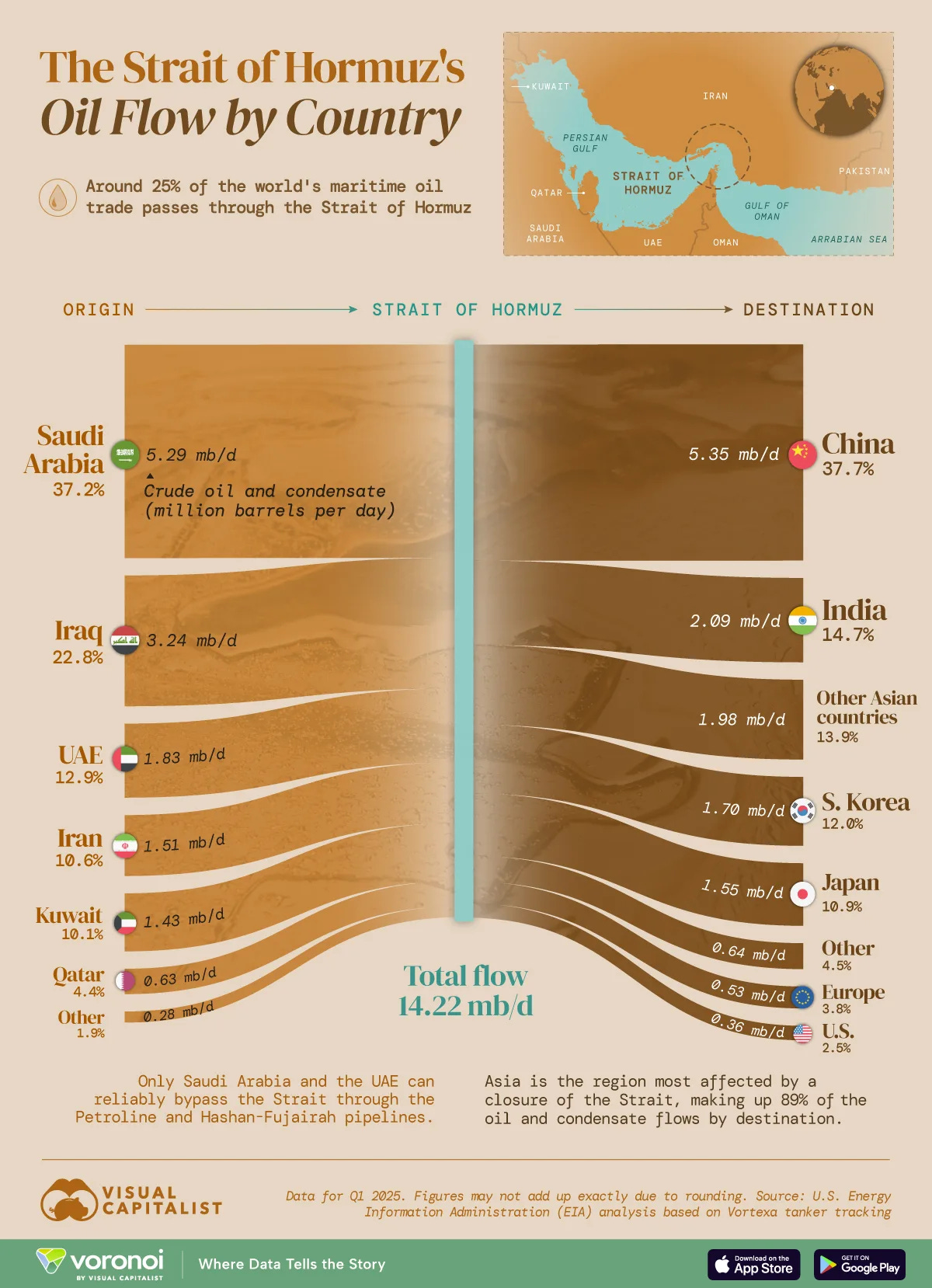
The United States produces more oil than any country in the world, yet that production does not insulate American consumers from global price shocks. Oil is priced on a global market, tied to benchmarks like Brent crude, which means events across the world directly affect domestic costs. The recent conflict involving the United States, Israel, and Iran, which escalated in February 2026, is a clear example. The closure of the Strait of Hormuz, one of the most critical energy chokepoints in the world, disrupted roughly 20 percent of global petroleum supply, about 20 million barrels per day, along with major volumes of liquefied natural gas. Since March 4, 2026, Iranian forces have declared the Strait closed and have attacked shipping vessels, leaving approximately 200 ships stranded as tensions escalated. The impact was immediate and predictable. Brent crude surged more than 50 to 60 percent within weeks, rising from around 66 dollars per barrel to over 112 dollars. U.S. gasoline prices followed, reaching an average of 3.72 dollars per gallon by mid March, a 25 percent increase. Electricity costs reflected the same vulnerability, particularly in places like Hawaii, where roughly 75 percent of electricity generation relies on imported oil, leading to projected increases of 20 to 30 percent in utility bills.
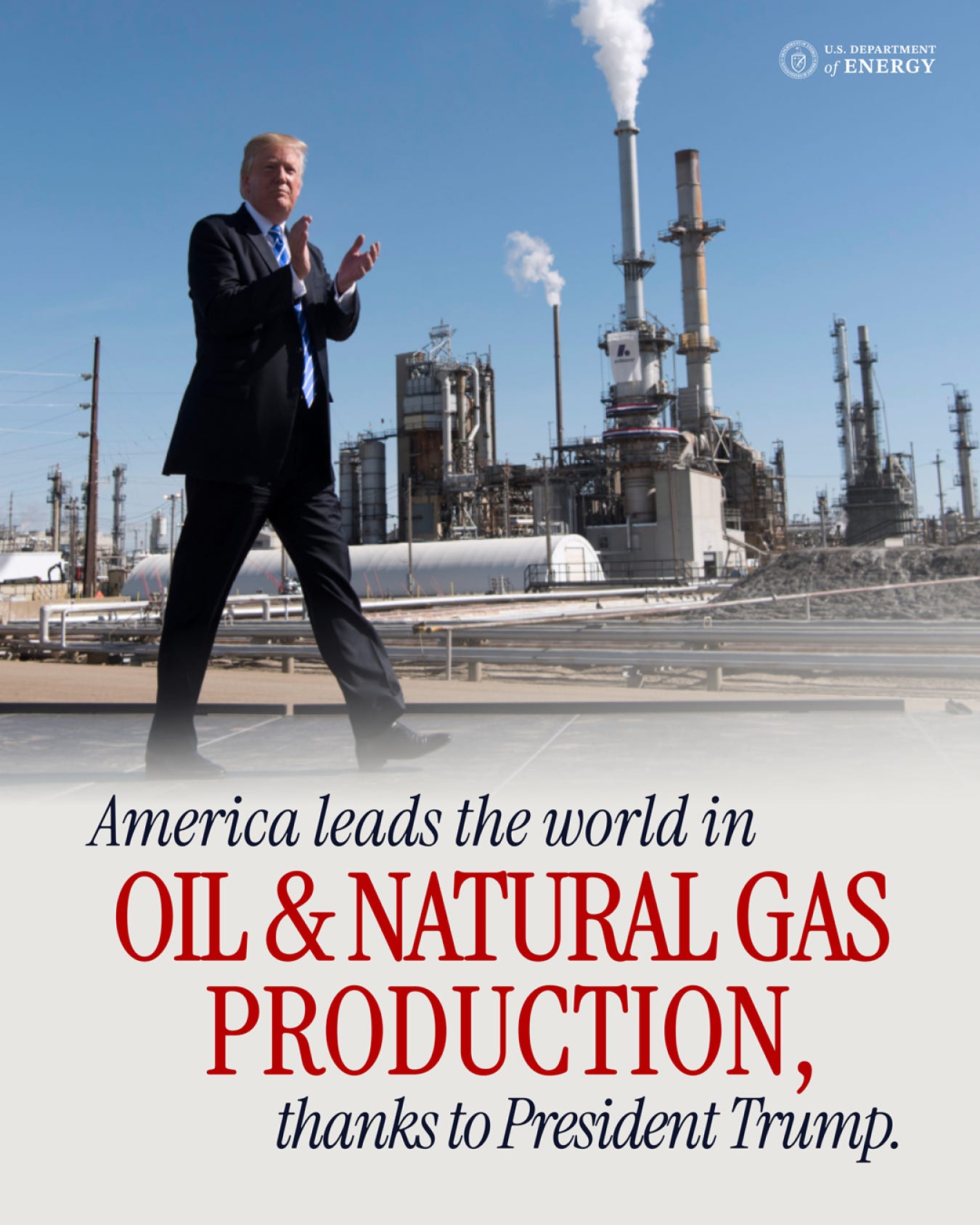
These outcomes are not surprising. They are the direct result of a system that remains fully exposed to global oil markets. Even though the United States has reduced its reliance on Persian Gulf imports, down to about 8 percent in 2024 from roughly 25 percent in 2014, and shifted toward Canada as a primary supplier, it still imported approximately 0.5 million barrels per day through the Strait of Hormuz. More importantly, pricing exposure never changed. Oil is a globally traded commodity, and any disruption anywhere affects prices everywhere. Structural realities reinforce this dependence. U.S. refineries were built to process heavier crude, while domestic shale production produces lighter oil. As a result, the United States exports light crude and imports heavier crude to maintain refinery efficiency. Retrofitting that infrastructure would require billions of dollars and years of work, locking the system into its current state.
All of this explains why dependence exists. It does not explain why no one is forcefully talking about how to end it.
Because the alternatives are not theoretical. They are already here, and they are scaling. Electric vehicles now deliver between 250 and 350 miles per charge, covering the vast majority of daily driving needs, while my hybrid vehicle reach approximately 488 miles per tank, significantly reducing fuel consumption even within the existing system. Charging infrastructure continues to expand, and residential charging allows consumers to move away from traditional fueling patterns altogether. Renewable energy sources such as wind and solar continue to grow their share of electricity generation, while nuclear energy remains one of the most reliable large-scale, zero emission options available. Battery storage technology continues to improve, addressing long-standing concerns about intermittency and making renewable systems more viable at scale. The tools exist, the technology exists, and the economic case continues to strengthen.
And yet, when global conflict once again exposes the risks of oil dependence, there is no aggressive, sustained push toward these alternatives. This is where the failure becomes impossible to ignore. The political response, particularly from Democrats who claim to prioritize climate policy and energy transition, remains reactive and weak to nonexistent. The conversation stays focused on oil supply, price stabilization, and short-term fixes instead of clearly connecting these recurring crises to the need for a structural shift. At the exact moments when the argument for alternative energy is strongest and most obvious, it is not being made with any force or consistency.
This is not a technology problem. It is not a lack of solutions. It is a failure of messaging, prioritization, and political will. The hesitation is obvious. Concerns about cost, voter reaction, and short-term economic pressure consistently override long-term strategy. Instead of using these moments to clearly explain why reducing dependence on oil matters, leaders fall back on managing the same system that continues to create the problem.
What this really means is simple. They do not even have the will to speak about it or bring it into the conversation. They remain silent on an issue that should be front and center. There is no serious effort, just messaging that appears during general elections and then disappears afterward. The environment and climate conversation has taken steps backward following recent election losses, and that shift is visible.
Not only do Democrats fail to act, they have allowed the issue to regress by years, especially as the current administration shows little interest in science or climate policy. At the same time, the financial incentives remain clear. Oil companies continue to generate significant profits while consumers are left dealing with rising costs just to fill a tank of gas.
The result is a repeating cycle where dependence is acknowledged, the consequences are felt, and yet no meaningful shift in the public conversation ever follows.
Economic interests further reinforce this stagnation. The fossil fuel industry remains deeply embedded in the global economy, with infrastructure, capital investment, and political influence that sustain its position. Transitioning away from oil is not just a technological shift, it is a structural one that affects markets, employment, and power dynamics. However, none of these realities justify the complete lack of urgency in communicating the path forward.
For consumers, the logic is increasingly straightforward. Gasoline prices are volatile because they are tied to global events. Electricity prices are generally more stable and locally regulated. Reducing dependence on oil is not an abstract environmental argument, it is a practical step toward stability and control. Even the broader evolution of transportation, including electrification and the early stages of autonomous vehicle deployment, points toward a future where reliance on oil is reduced by design. That future is not speculative. It is already taking shape.
What is missing is the willingness to say it clearly and repeatedly when it matters most. When prices spike, when conflicts disrupt supply, and when the vulnerabilities of the system are fully exposed, that is the moment to make the case. Reduce dependence on oil. Invest in alternatives. Accelerate the transition. Instead, there is silence, or worse, a return to the same short-term framing that avoids the larger issue entirely.
That silence is not subtle. It is consistent, and it is defining the trajectory of energy policy in the United States. The country has the resources, the technology, and the capability to move toward a more diversified and resilient energy system. The barrier is not feasibility. It is the refusal to forcefully advocate for change when the evidence is undeniable.
This is not just about oil. It is about dependence, and more importantly, about the failure to confront that dependence directly. The data is clear, the risks are visible, and the alternatives are viable. Yet the conversation does not shift. That is the real story.
Today at the Sunset Entertainment & Media Companies
A Complete, Ground-Level Breakdown of the Los Angeles Rams, Their Roster Reality, and What Actually Matters Right Now
Corporations Are People, My Friend