K2-18b sits about 124 light years away in the constellation Leo, orbiting a small, cool red dwarf star so tightly that a full year there lasts just under 33 days. Read the Full Article on Substack!
I have never had much patience for hearsay. Sightings, whispered military programs, grainy footage that somebody swears is real, none of it has ever moved me, because none of it is science. Even the show that first got me thinking seriously about the universe made that distinction for me before I knew I needed it. I loved the X-Files episodes built around actual human monsters, the ones about a genuine psychopath hiding in plain sight, serial killers and I could never get invested in the outer space mythology hanging over the rest of the series. That stuff always felt like theory dressed up as intrigue. I do not do theory. I do facts.
So it says something that the first time in my life outer space actually grabbed me by the collar, it was because of an exoplanet called K2-18b, and because for once, the story wasn’t hearsay. It was peer reviewed data, competing analyses, real scientists arguing with each other in public about what a set of numbers actually means. That argument itself is what did it. Not a UFO. A disagreement about chemistry.
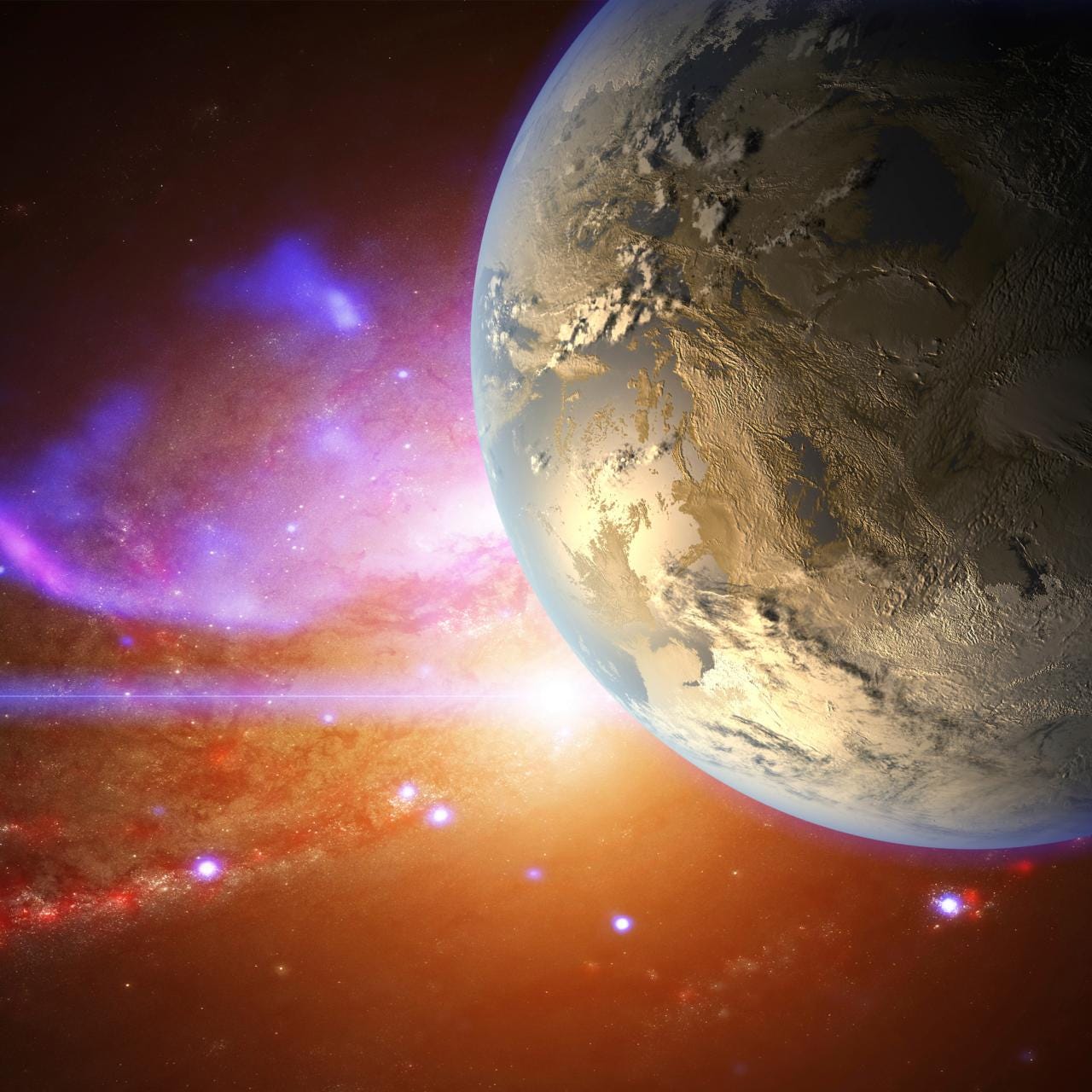
A Planet That Might, or Might Not, Be Breathing. K2-18b sits about 124 light years away in the constellation Leo, orbiting a small, cool red dwarf star so tightly that a full year there lasts just under 33 days. It is nearly nine times the mass of Earth and more than two and a half times as wide, big enough that astronomers put it in its own category entirely, something between our own rocky planet and a gas giant like Neptune. Its atmosphere shows almost no ammonia at all, which in planetary science is close to a signature in itself, because a lack of ammonia paired with methane and carbon dioxide points toward a world with no solid land whatsoever. K2-18b, if the models hold, is an ocean from pole to pole, wrapped in a thick blanket of hydrogen, sitting in exactly the temperature range where that ocean could stay liquid instead of freezing or boiling away. Read the Full Article on Substack!