Corporations Are People, My Friend: Laguna Beach: The Real Orange County Reunion
I’ve had a strange dichotomy hit me over the last day. It just happened, and I’m trying to make sense of it as I go.
I also have another article to post about the SAVE America Act, but at the same time, I find myself stuck on something completely different.
While watching the Laguna Beach reunion that started airing over the weekend on the Sunset app, I felt this unexpected sense of heartbreak, and I honestly cannot explain why. It hit me like that feeling on the last day of summer camp.
Part of that comes from going back and looking at Laguna Beach: The Real Orange County more than twenty years after it first aired. The show premiered on September 28, 2004, ran for three seasons through 2006, and became one of MTV’s biggest reality properties at the time. It was one of the first shows to really blur the line between reality and storytelling, what people now call the “docu-soap” format, where real-life footage was shaped to feel like a scripted teen drama.
On the surface, it looks like a perfect version of teenage life in Southern California. You have the beach, the parties, the relationships, the lifestyle. But the way it was actually made is what stands out. They were not filming nonstop like earlier reality shows, and they did not use traditional confessionals. Instead, everything was guided through voice-over narration, which gave it a cleaner, more controlled, almost cinematic feel. It looked real, but it was clearly being shaped into something.
And that is where the disconnect starts for me, and probably where this feeling is coming from.
Because once you step back, you realize how effective that format was. Laguna Beach proved you could make highly watchable television at a much lower cost than scripted shows, while still keeping that polished, story-driven feel. That changed things. It showed MTV and everyone else that this model worked, and it helped push the network even further away from music and deeper into reality-based programming.
But what makes the show newly difficult to think about in 2026 is not only its nostalgia. It is also the growing recognition that the series was one of the earliest major examples of a corporation turning the private development of actual teenagers into perpetual intellectual property.
The recent reunion, The Reunion: Laguna Beach, did not simply celebrate a pop culture phenomenon. It reopened the central moral question that was buried under the original marketing: what exactly happens when a media company treats young people as content inputs first and human beings second?
The cast came back older, calmer, more accomplished, and more in control of themselves. But it did take twenty years for all of them to come together, and you can assume there were many opportunities along the way that did not happen. For the most part, there has been very little public presence from many of them over the years.
I understand as of a minute ago, that Stephen was in a successful television show, but I just realized that I watched an entire season of The Traitors without even knowing he was the same Stephen from Laguna Beach. That says a lot about how disconnected even someone like me was from what they became after the show.
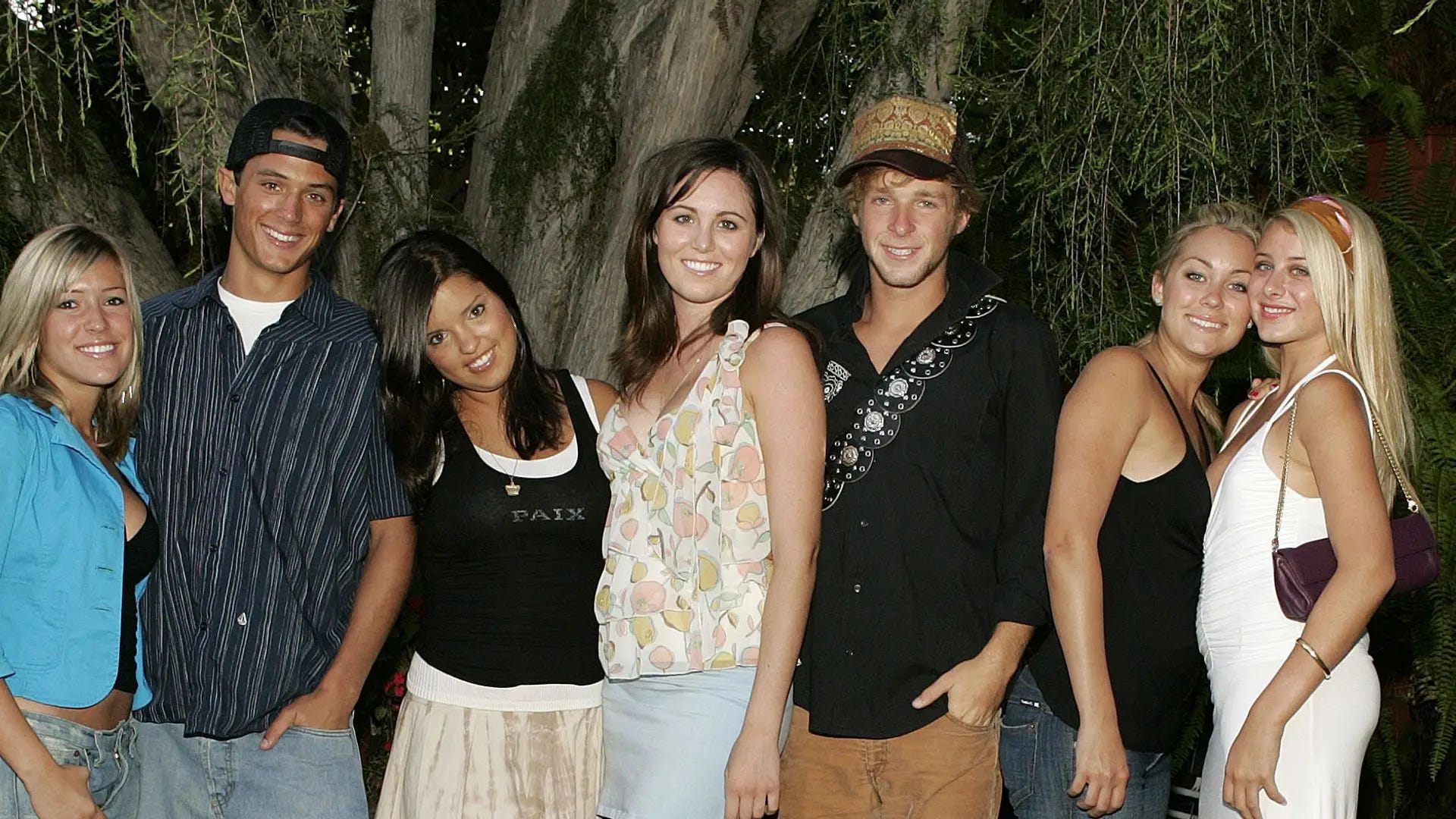
That composure is part of what makes the whole thing feel sadder, not less sad. You are no longer watching the manufactured rivalry between Lauren Conrad, Kristin Cavallari, and Stephen Colletti. You are watching adults sit beside the public versions of their seventeen-year-old selves and try to come to terms with what a corporation did with those versions of them once money became involved.
Remember, for the most part, we have no real idea what they did after the show ended. And yet, they have all clearly made it in their own ways. By any objective measure, they are successful. But if you bring in the idea of the butterfly effect, you start to wonder what their lives would have looked like if that show never existed. That question sticks with me and is part of why I feel this odd emotion.
Would Kristin have felt compelled to date high-profile athletes or public figures if she had not been portrayed as “the most popular girl” at such a young age to millions of fans? Did that identity follow her into adulthood in ways none of us fully understand?
I keep coming back to this idea that high school is simply too young to be turned into content, too young to be edited, packaged, and sold, and too young to have your identity shaped by a corporation in this way. It is one thing to be a child actor or a music artist. If you consider the level of manipulation involved, this is different. This is about a personality, not a craft or an art form being developed.
To be honest, I do not remember many of the others being part of pop culture to the point where people followed their every move the way they did with Kristin. If they were covered in the press to that extent, then I stand corrected. But for me, I had completely forgotten about the show until recently.
And if you set aside shows like 16 and Pregnant, which I personally struggle with, and even though I have had songs placed in Teen Mom recently, I have never actually watched an episode, you still have to ask where the line should have been drawn. Even if you understand the social experiment behind them, the question remains: even with adults signing off on it, did they truly understand what it meant in the broader scope of life?
At that time, I do not think they did. And honestly, in defense of MTV’s production staff, I do not think they did either. If someone did, then that is a completely different conversation. That would be diabolical.
Because once you step back and look at it clearly, this was not just entertainment. It was something much more complicated, and maybe that is why it does not sit easily for me. And in full transparency, I worked on The Truman Show. Specifically, I handled music clearance for the film and/or the soundtrack. I even attended the world premiere in Hollywood, or wherever it was. I honestly do not remember exactly. What is not strange is that I have never watched that movie again after that screening. Even though it is now on rotation on the Sunset app across some of the premium channels, I still have not revisited it.
My point is that I was one of those people who simply could not imagine anyone willingly allowing cameras into their personal lives. I remember thinking the entire concept was so far-fetched that I could not take the film seriously. I did not connect with it at the time. I understood it intellectually, but I did not see what it was predicting. I did not have the vision for what reality television would eventually become, and I simply could not fathom it.
With that said, at that point in my life, I was already a grown man when the show originally aired. I had nothing invested in it from a high school or hysteria point of view. I had just been pushed out of my last real job with a major. I was working to stop partying and using drugs in the early to 2000s. I was rebuilding both personally and professionally and eventually started Sunset in the mid to late 2000s. I also went through a major breakup after living with someone for however many years. It was the perfect storm, in terms of my mind being pulled in so many directions that I had to figure out on my own. Those were complicated, transitional years because fyi, quitting is the easy part. Rebuilding your brain and your life afterward is what is truly difficult, and it takes years to conquer.
So while Laguna Beach was rising culturally, I was going through my own version of collapse and reconstruction. And yet, in a completely different way, the show still affected me. I even went on a couple of dates with a girl in New Jersey who looked remarkably like Kristin Cavallari. That was honestly the main reason I wanted to meet her in the first place, which, looking back, makes me sound like an idiot, but it is the truth. The show clearly had an impact on me, even from a completely different perspective that is very stupid as I say it out loud.
Which makes part of it aspirational. I was not watching from a place of teenage obsession. I was watching as someone who wished I had grown up surfing, skateboarding, and living that kind of Southern California lifestyle. If you set aside everything else, a lot of people would want to live like that. But the reality is, they were teenagers and early twenty-somethings, while I was already in my forties when I saw the show. That contrast matters and is why I brought up today.
I also never rewatched the series. In fact, I had to go back to IMDb today just to understand the franchise and what it was really about. I had mixed up characters and timelines with other shows that were part of that world, and I think I even transposed characters from different reality shows.
I had forgotten about Audrina and Jason. I had forgotten about the transition into The Hills, where Lauren moves into the next phase of her life, introducing entirely new dynamics and personalities that eventually spun off into their own franchises, not to mention becoming massively popular in their own right while appearing on other reality shows. Hell, I even forgot about Heidi and Spencer, for God’s sake.
What is even more surreal is realizing how disconnected I was from all of it. Like I alluded to above, I watched The Traitors and did not even realize until a minute ago that Stephen on that show was the same Stephen from Laguna Beach. Honestly, I am not even sure I had fully placed where I knew him from, but I did like him on The Traitors this year. That connection did not click until today. After seeing old footage of him, Stephen had that classic, almost Rob Lowe in St. Elmo’s Fire kind of look back then. The other guys were good-looking too, but I had forgotten most of them until recently.
At the same time, I have watched plenty of reality TV over the years, including Vanderpump Rules, Southern Charm, Summer House, and all of their spin-offs, so I am not disconnected from the genre. But something about this hits differently.
I also came across Kristin’s live tour show last year, the one where she traveled city to city with different guests. I remember Craig Conover and others appearing at one of the stops. I started watching some of the earlier episodes before catching the later ones in real time, and that is when I saw Talan and Stephen again. Even then, I did not fully grasp the magnitude of what I was watching.
Looking back now, I actually think that tour may have played a role in leading to this reunion. It felt like Kristin was opening up her past in a way that made revisiting everything possible, not just for her, but for everyone involved. And what stood out most was how they all handled it. She seemed very happy even on so-called bad days.
The reunion itself is beautiful in a way I did not expect. Keep in mind, I cry at things like the 1980 USA Hockey team highlights when “Just Once” by Quincy Jones is playing in the background, but I was in tears watching this, and again, I do not even know why.
Regardless, not one sentence felt like a dig. There was nothing negative, nothing mean-spirited, nothing derogatory toward anyone else. That is almost unheard of for a reunion. It felt genuine. It felt resolved. And for me, it was unexpectedly emotional. I thought they all came across as very mature, astute, and genuinely good people today. They all seem grounded, especially if you take reality television out of the picture. Most of all, they not only seem comfortable in their own skin now, but they also come across as genuinely kind. They seem like very nice people.
I found myself feeling heartbroken, not because anything tragic happened, but because of what it all represents. Maybe that is why that ‘pit’ in my stomach. Then I had this moment where I realized they are all doing far better than I ever did in many ways, and yet that did not take the feeling away.
That is where the title of this piece matters. Corporations are people, my friend, has long been one of the most revealing and infuriating summaries of American corporate logic. A corporation can claim person-like rights in the legal system while operating with no conscience, no shame, no adolescence, no nervous system, no private pain, no developmental vulnerability, and no soul.
The history of corporate personhood in the United States is tangled, but the long arc is clear enough. American law evolved in ways that allowed corporations to hold property, enter contracts, sue and be sued, and claim constitutional protections, including major Fourteenth Amendment arguments that later became central to modern corporate power. Scholars and legal historians still debate parts of that history, but the larger truth is undeniable. The legal system has long made room for corporate rights while leaving moral accountability far more slippery. That contradiction sits at the center of the Laguna Beach story. MTV, backed by a large media corporation, could operate as a rights-bearing entity with a fiduciary focus on profit. The teenagers it filmed had to live the consequences in their own bodies, friendships, reputations, and futures.
What makes Laguna Beach especially revealing is how early it arrived in the modern reality ecosystem. This was not the fully industrialized influencer age. There was no mature creator economy waiting on the other side, no standardized public conversation about cast aftercare, and no widespread understanding among viewers that appearing on a hit show did not automatically mean financial security for life. It was frontier television dressed up as glamorous youth culture.
That change mattered. Instead of becoming a true school-based documentary, the show turned into something even more cinematic and arguably more manipulative. It became a selective off-campus emotional world made up of parties, parking lots, beaches, dinners, and relationships, filmed only a few times a week and shaped into storylines with voice-over narration rather than constant observational access. In other words, reality was not simply captured. It was curated into melodrama.
Season one made the formula famous. Lauren Conrad narrated, and the show centered on the now-iconic triangle between Lauren, Stephen, and Kristin. Season two shifted narration and expanded the ensemble. Season three attempted a reset with an entirely new cast but could not maintain the same cultural impact. The network could continue the brand, but it could not recreate the exact alchemy of the human beings it had already consumed.
That is the corporate method in miniature. The product is scalable. The people are not. The corporation can always imagine replacement. It can recast, spin off, repackage, and relaunch. The human being only gets one adolescence.
And yet, when the cast has spoken more openly in recent years through interviews, the reunion, and their podcast, the same pattern keeps emerging. The conflicts that made the show addictive were often amplified and steered by adults who understood the commercial value of teenage insecurity better than the teenagers themselves did. At seventeen, they were material. At forty, they finally have authorship.
The money side only sharpens the indictment. The first season paid roughly $2,000 to $2,500 total. That number sounds absurd when placed next to the cultural footprint of the series. A hit show did not make them wealthy. It made them visible. The network owned the engine. They owned the consequences.
Looking forward at everyone in Laguna Beach: The Real Orange County now, what stands out is not just where the cast ended up, but how differently their lives unfolded once the cameras were gone. At the time, it felt like we were watching people who had already “made it,” but in reality, most of them were just getting started. In many ways, they had to rebuild their identities after being defined so publicly at such a young age.
Lauren Conrad is the most obvious example of someone who successfully transitioned out of the show’s shadow. She used the visibility from Laguna Beach and The Hills to build a long-term business in fashion and lifestyle. Her brand has remained commercially viable for years, and she has largely stepped away from television, choosing control over her image instead of continued exposure.
Kristin Cavallari took a different route, leaning into the spotlight before ultimately reshaping it on her own terms. From reality television to entrepreneurship, she built a successful lifestyle brand and maintained a public presence while gradually gaining more control over how she is perceived. Her recent projects and appearances show a version of herself that is far more self-aware than the one audiences first saw.
Stephen Colletti’s path highlights something else entirely. He stepped away from reality television for years and built a career in scripted television, most notably on One Tree Hill. What is striking is how easy it was to disconnect him from his Laguna Beach identity. Even recently, I watched him on The Traitors without realizing I was looking at the same person. That says a lot about how far removed many of them became from the original narrative that introduced them.
Others from the cast took quieter but equally significant paths. Lo Bosworth built a business in the wellness space. She is now pregnant and I think I read that she has established her own company that is worth tens of millions of USD. Talan Torriero moved into business and family life whatever that means.
Two of the most distinct personalities from Season 1, Morgan Olsen and Christina Schuller, took very different paths than what the show might have suggested at the time. Morgan was portrayed as deeply religious during the series, and that remained a central part of her life after filming. She stepped away from the entertainment world almost entirely, went on to attend Brigham Young University, and built a life focused on family, faith, and education, largely outside of the public spotlight.
Christina Schuller’s trajectory was more complex. While she also came from a faith-based background, her experience after the show included significant personal challenges that she has spoken about more openly in recent years. She has discussed mental health and drug abuse struggles during her college years, including a period that required hospitalization, and has since framed that time as part of a longer process of understanding the impact the show had on her identity and sense of reality. Unlike the more commercial paths taken by some of her castmates, her story reflects a more internal, personal journey rather than a public-facing career.
What becomes clear is that there was no single outcome. Some leveraged the exposure into long-term success. Others stepped away entirely. Some had to spend years separating themselves from the versions of who they were portrayed to be. The common thread is that none of them were simply “set for life” because of the show. If anything, the show created a starting point that each of them had to navigate in very different ways.
Another common thread is that many of them are now married and have children, which, in itself, can be seen as a form of success. Even considering one divorce, the overall outcome is not unusual when compared to broader American trends.
And that is where the narrative shifts. The audience saw a finished product. What actually followed was a long, uneven process of people trying to take back ownership of their lives after those lives had already been shaped, edited, and distributed to millions.
It is similar to how someone is portrayed after an injury on television, where you only see them once they have recovered, without fully understanding what they went through to get there. That is how this cast feels to me, even though I did get some insight from Kristin’s show that aired last year when she went on tour. I was already aware of some of the things discussed on the reunion.
I also saw a different side of Kristin during that tour. She came across as self-deprecating, very at ease, and genuinely comfortable with herself. Even on her bad days, she seemed happy. I did notice that same sense of hysteria while watching Kristin’s tour series that aired last year. She sold out most, if not all, of the venues she appeared at. Her fans are very loyal.
Overall, I am still not sure where this feeling, like it is the last day of summer camp, comes into play. Maybe it is because it is no longer just nostalgia. It is the realization that what once looked like a dream was also a form of extraction. It may also be strange to see something so surreal come full circle, at least for me, for what I think is the first time.
Today at the Sunset Entertainment & Media Companies
Corporations Are People, My Friend
A Ceasefire, a Declaration of Victory, and the Gap Between What We’re Told and What Actually Changed
Rams Continue Shaping Draft Strategy in Final Weeks
Sunset
Scarpetta on Sunset: A Precision-Built Crime Thriller Redefines Forensic Drama for the Global Streaming Era
Live Jam
Live Jam Features Fleetwood Mac “Live” on Live From The Vault
Sustainable Action Now
From Circus Cages to Open Skies, James Duckett Stay, Zoomies at Lions Rock, A Hope For Paws Nine Lives Rescue, The Global Oil Push, Prison Gerrymandering, More
Sunset Daily News
Explore New Jersey
The Vending Lot
Pro Merch
Nature’s Sunset
Nature’s Sunset Organic Cotton Apron: Elevated Utility, Sustainable Design, and the New Standard for Everyday Kitchen Performance
Sunset Special Markets (SSM)
Sunset Music
Sunset Recordings
Calculated Chaos and Cultural Timing: Federal Moguls’ “Vicarious” Takes Center Stage at Sunset