Context and Timeline of the Conflict
The current war involving Iran and Israel has rapidly evolved from an initial shock campaign into a broader conflict defined by coercion, economic leverage, and diplomacy under pressure. The U.S. military campaign began in late February 2026, with the stated goal of dismantling Iran’s military capabilities and neutralizing perceived threats.
From the outset, two realities have defined the conflict. First, the scale and intensity of U.S. and allied strikes have been significant, targeting missile systems, production facilities, naval assets, and security infrastructure. Second, despite these attacks, Iran has retained the ability to impose costs through missile and drone strikes and, most importantly, through disruption of maritime traffic in the Strait of Hormuz.
Early in the conflict, a major escalation occurred with the killing of Iran’s Supreme Leader, an event that shaped Iran’s retaliatory posture and reinforced the war’s “decapitation” strategy. However, rather than collapsing, Iran adapted and shifted toward asymmetric pressure.
Key moments in the war highlight this transition. Strikes on Kharg Island targeted military assets while deliberately avoiding oil infrastructure, signaling that energy resources were being preserved as leverage rather than immediately destroyed. Trump used that as a threat this week, confirming they remain intact. Additional strikes on nuclear facilities reinforced that limiting Iran’s nuclear capability remains a central objective.
The Limits of an Airpower-First Strategy is at the core of this conflict is a fundamental question: was air power expected to be enough to force Iran to concede or collapse?
The evidence suggests that while planners did not rely on a simplistic assumption, there was a clear preference for an airpower-driven strategy. The operational focus has been on destroying high-value targets rather than occupying territory or establishing political control. This reflects a model of coercion through overwhelming force rather than long-term stabilization.
However, political messaging has been inconsistent. Statements about regime change introduce a far more complex objective than simply degrading military capability. Regime change, if taken seriously, implies long-term involvement, including security, governance, and sustained presence. That is not something air strikes alone can achieve.
There were also indications that some policymakers believed rapid strikes and leadership decapitation could trigger internal collapse. That assumption has not materialized. Instead, Iran has demonstrated resilience, continuing to launch attacks while adapting its tactics through dispersal and asymmetric methods.
The growing discussion around potential ground operations reflects this gap. If air power were sufficient, there would be no need to consider deploying troops or securing territory. The fact that these options are being debated suggests that the initial strategy has not fully achieved its intended political outcomes.
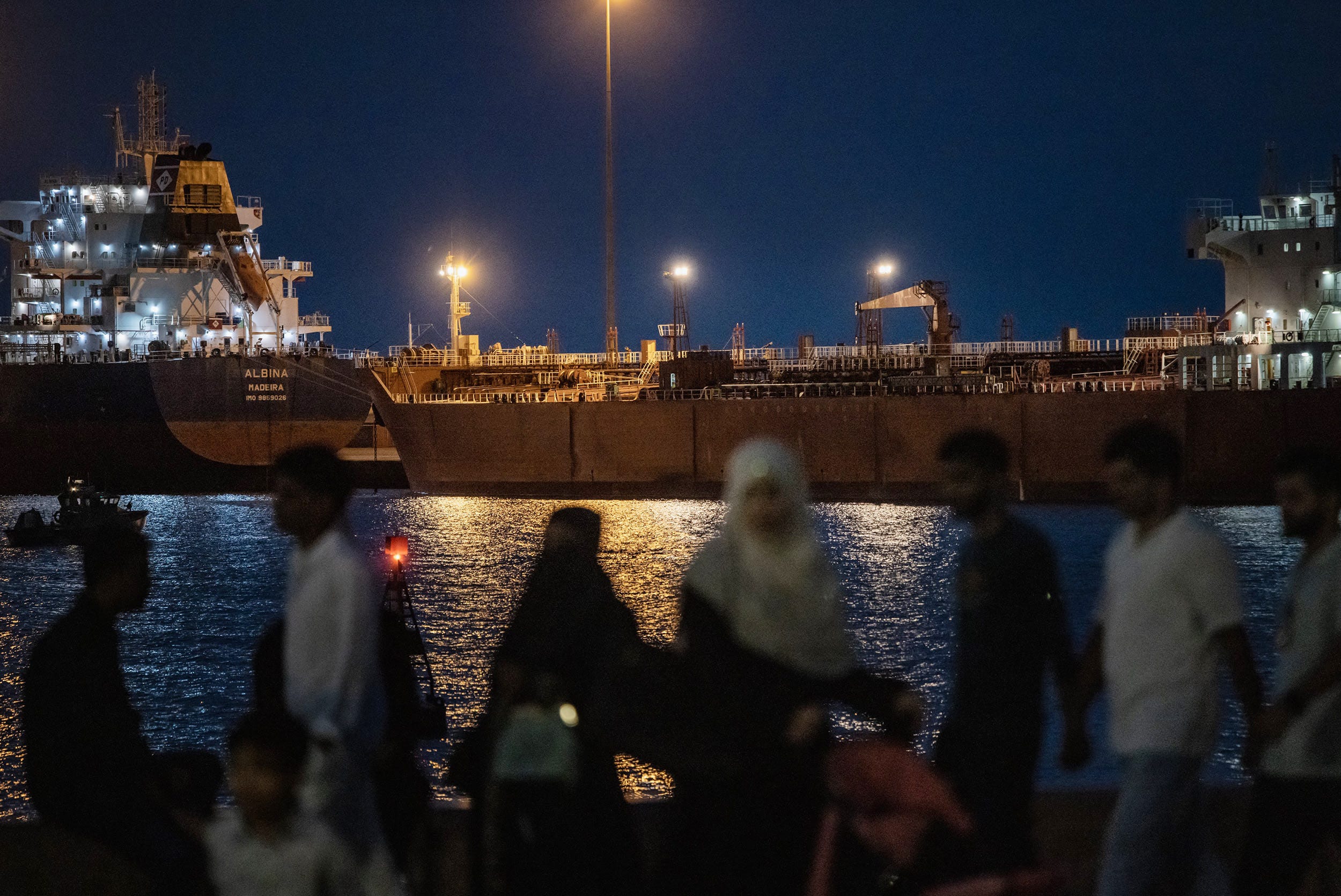
The Strait of Hormuz has become the defining factor in the conflict. Even if Iran’s conventional military capabilities are degraded, its ability to disrupt this chokepoint remains intact.
This is because Hormuz does not need to be physically closed to be effectively unusable. Risk alone can shut it down. Attacks on vessels, the threat of mines, and unpredictable enforcement measures have drastically reduced shipping traffic. In some cases, a system of controlled passage has emerged, where vessels face inspections, escorts, or financial demands.
Gas prices in the United States have risen incredibly fast, unlike anything I have ever seen. I was a young kid in the 1970s during those price hikes and shortages, but that increase was gradual. Plus, I was a kid and couldn’t drive, but I do know that the cars we had growing up used a lot of gas. I didn’t really feel the gas crisis at the time, and if my parents did, I don’t remember any issues like waiting in long lines or paying extremely high prices. This time, it is happening almost overnight. Right now, I have five bars left in my car. The last time I filled up, gas was below $2 or right around it. The next time I fill up, I will likely be paying close to $4, I have already seen prices around $3.85 locally.
The result is a functional disruption of global energy flow without a formal blockade, hence the rapid reaction. Given that a significant portion of the world’s oil passes through this narrow corridor, even limited interference has outsized economic consequences.
This reinforces a critical point: the Strait was never a secondary issue. It is central to the conflict. Any strategy that did not fully account for Iran’s ability to control or disrupt Hormuz was incomplete from the start.
Now comes diplomacy and the search for an exit. There are reports that Trump is growing bored with the war, and we know that diplomatic efforts are ongoing, though they remain tightly intertwined with military pressure. Negotiations have been conducted through intermediaries, with proposals that include limits on Iran’s nuclear program, missile capabilities, and regional influence in exchange for sanctions relief.
Iran’s position, however, reflects its leverage. Its demands reportedly include an end to hostilities, guarantees against future attacks, compensation for damages, and recognition of its authority over the Strait of Hormuz.
This is where the conflict becomes difficult to resolve. The United States is seeking constraints on Iran’s capabilities, while Iran is seeking security guarantees and recognition of control. These are not easily compatible positions.
The use of energy infrastructure as leverage further complicates matters. By holding back strikes on oil facilities, the U.S. has preserved a major bargaining chip. At the same time, deadlines tied to reopening Hormuz introduce pressure but also risk escalation if those deadlines are not met.
Kharg Island and the escalation question represents one of the clearest indicators of how far this conflict could escalate. As a critical hub for Iran’s oil exports, it is both a strategic asset and a potential target.
There has been discussion of seizing the island to gain control over Iran’s energy flow. While this could provide leverage, it would also mark a significant escalation. Occupying territory would expose U.S. forces to ongoing attacks and could transform the conflict into a prolonged engagement.
This is where the limits of the current strategy become most apparent. Air strikes can degrade capabilities, but they cannot guarantee control over critical infrastructure or shipping lanes. Achieving that level of control would require a sustained presence, which carries its own risks and costs.
My concern today is that I feel we need to get back to where we started, though I understand that is not entirely a valid way to assess the situation given the bombings and destruction so far. This brings us to what “getting back to normal” really means. The idea of returning to prewar conditions is understandable, but it may no longer be realistic in the short term. That is why I feel this way, and it is not what I expected to happen. It is also what I was asking them to clarify from the very beginning.
The conflict has fundamentally changed the strategic landscape. Both sides have hardened their positions, and the economic consequences of disruption in Hormuz will persist even if active fighting decreases. Shipping companies, insurers, and governments will continue to factor in elevated risk.
More importantly, the nature of the Strait itself has changed. It is no longer just a passageway but a contested space where control can be exercised without traditional military dominance.
Finally, the political goals of the war matter. If the objective is limited, deterrence or negotiated constraints, then a combination of air power and diplomacy may eventually produce an outcome. But if the objective includes regime change, then the implications are far more serious.
Calls for regime change are not abstract. They imply a long-term commitment, potentially lasting years or even decades, to maintain stability and control. That is the part that brings this back to reality.
You cannot remove a regime, destabilize a region, and control a critical global chokepoint without being prepared to stay.
And that is the central issue now: whether the strategy aligns with that reality, or whether the situation is already moving in that direction regardless of initial intent.
Corporations Are People, My Friend
The Democrats Still Sound Out of Touch even as of today in March 2026
The Rams’ Draft Crossroads at No. 13 and the Decision That Will Define Their Super Bowl Window
Sunset Presents Peaky Blinders Returns — A Cinematic Reckoning Streaming Now — Peaky Blinders: The Immortal Man Is Streaming Now on Sunset!
Live Jam Presents Live From The Vault, Anastacia’s #NTK25 Live in Concert (2026), The Global Power of Live Performance and the Return of the Real Sound in 2026
William Shatner, Lighthiser v. Trump, Courtney Stodden, SeaWorld, Samba, National Park Service, Economic Security Act (S. 3971) & More at Sustsainable Action Now!
Explore New Jersey / Sunset Daily News