Corporations Are People, My Friend – Read on Substack – Follow on Substack
There is a persistent disconnect in American politics right now, and it is not subtle because it is still playing out in real time, in interviews, in messaging, and in the way certain political figures continue to interpret a country that has already made it clear they are not aligned with its priorities. The most striking part is not just the disconnect itself, but the fact that it continues despite recent electoral outcomes that should have forced a reset, let alone people like me pointing it out at the top of our lungs.
People do not seem to mind when politicians and world leaders admit to behavior like saying they can grab women inappropriately, or when they express a lack of empathy around serious issues like when someone dies, and yet the Democrats, even with all of that going on, still managed to lose in 2024. Not only did they lose, they lost control of all three branches of government, which is hard to do.
Now they complain, and they continue to think that Americans “get it” and do not want to deal with people who are mean. You cannot be farther from that statement, considering that is how the GOP won all three branches of government, which again is hard to lose. You have to be terrible at your jobs and completely out of touch, and a case in point is today. Watch the current media cycle closely and the pattern becomes obvious. Appearances meant to project leadership instead reinforce a deeper issue, a failure to read the room.
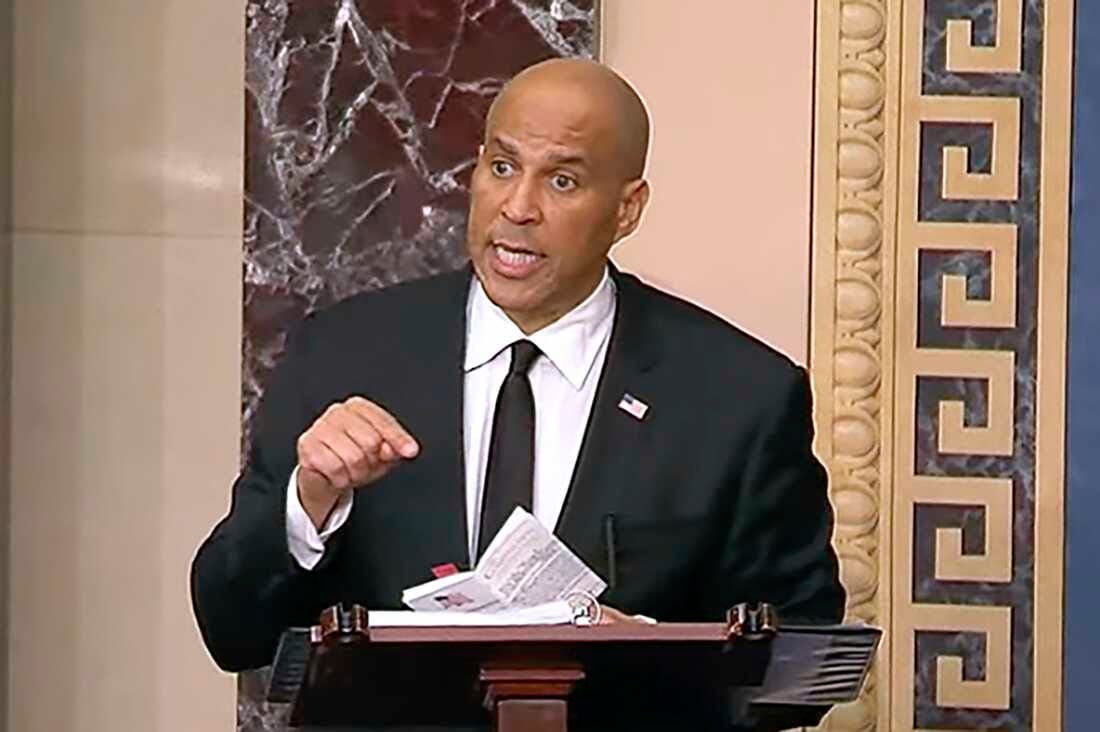
Take today’s commentary from Cory Booker on Morning Joe. In discussing the tone of American politics, Booker leaned into a familiar theme that Americans are looking for less hostility, less division, and more decency in public discourse. On its surface, that sounds reasonable. It sounds like something that should resonate. But the problem is not the sentiment, it is the timing and the context in which it is delivered.
Because the electorate has already responded, and it did not respond in a way that validates that message.
Invoking moments like John McCain defending Barack Obama as a “good man” during a campaign event is meant to highlight a higher standard of political conduct. But it also raises a more uncomfortable question: if that model of politics was truly what voters prioritized above all else, why has the political environment evolved in the opposite direction? Most importantly, how did that work out for John McCain? He lost that election. Why are candidates who embrace confrontation, bluntness, and aggression not only viable, but also successful?
This is where the messaging breaks down. It is not that voters reject civility entirely. It is that they are not prioritizing it over economic pressure, institutional distrust, or a sense that the system is not working for them. When political leaders emphasize tone while voters are focused on outcomes, the message lands as disconnected, regardless of intent.
A similar dynamic played out with Chuck Schumer last night. In moments that call for clarity, directness, and decisiveness, the response instead drifts into over-explanation, layered, cautious, and often missing the simplicity that modern political communication demands. In an environment where attention spans are short and stakes are high, voters are not parsing nuance. I could not even understand what Schumer was trying to say after like 30 or 40 seconds. It may as well have been like the teachers and adults on the Charlie Brown show, “Wah, wah, wah, wah, wah.”
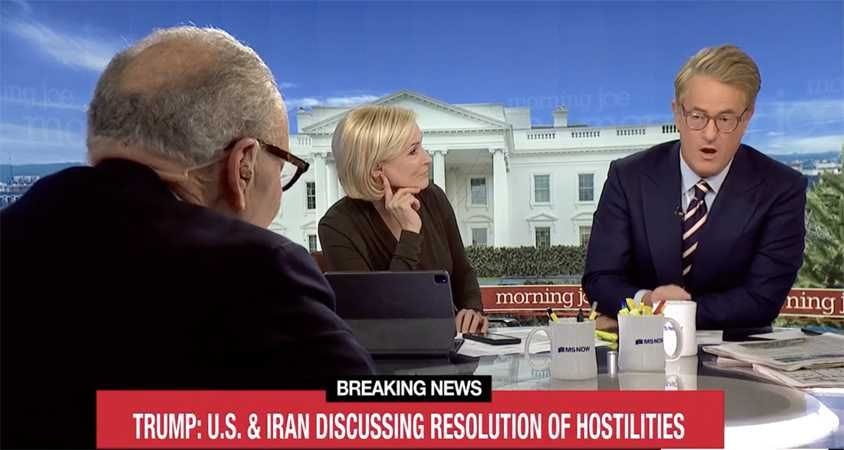
We are looking for clarity, one word, one position, one clear answer, and in this case, he should have said yes, and then gone on to explain what else could be done, but he sounded like a politician avoiding a direct admission that Iran without nuclear capability and weaponry is a good thing. Schumer would not admit it, and before I knew it, 40 seconds had passed and I had no clue what he was talking about after being asked about getting rid of Iran’s military capabilities. When that is not delivered, it reinforces the perception that leadership is hesitant or out of step.
This is not a stylistic critique, it is a functional one.
Because while this messaging continues, the underlying reality remains unchanged: the Democratic Party is still operating in the shadow of a major electoral loss that reshaped the balance of power in Washington. The presidency shifted. Congress flipped. Control consolidated elsewhere. That is not ancient history, it is the current operating environment. This just happened.
Americans do not get it, and the Democrats need to admit that quickly or they will lose this year when they could, if they did the work, win back two branches. They are acting like they do not have to do the work, while people in the GOP go on shows like Bill Maher and are effective at it, while Democrats flail because they only complain and have nothing to say after that. The Democratic Party is so lazy and bad at their jobs because the only efforts they make are complaining, then asking for hearings where they complain more, and honestly, the GOP gets the better of them every time. Instead of really making huge efforts to win back two branches, they seem satisfied letting things go while complaining and thinking the people will get it and understand, which, granted, they could do no work and still win back one branch and could even manage that way. But if anyone can blow even that natural political cycle, it is the Democrats in office today. They are horrible at their jobs.
They still think that Americans “get it.”
The most revealing aspect of this moment is the contradiction between what is being said and what has already happened. When political figures assert that Americans want a less confrontational, more restrained political culture, they are making a claim that is directly testable against recent outcomes. And those outcomes suggest something more complicated, if not outright contradictory.
Voters are not monolithic, but they are consistent in one critical way: they respond to what they feel impacts their lives most immediately. Cost of living, economic stability, public safety, and institutional trust are not abstract concerns. They are daily calculations. When those concerns are not addressed directly, and instead are filtered through broader narratives about tone or civility, the message does not just miss. It alienates.
This is where the “out of touch” label gains traction. Not as a talking point, but as a reflection of misalignment.
Because being in touch politically is not about intention, it is about calibration. It is about understanding what voters are prioritizing and meeting them there, directly, clearly, and without unnecessary abstraction. When that calibration is off, even well-meaning messaging can come across as disconnected or even dismissive, let alone clueless.
What makes the current moment particularly striking is that this misalignment is happening after a clear electoral signal. This is not a case of ambiguous results or mixed messaging from the electorate. The direction was clear. The shift was measurable. And yet, the communication strategy from some corners of the Democratic Party still reflects an older framework, one that assumes a set of priorities that voters have already shown they are willing to override.
That is why these media moments matter. They are not isolated clips or throwaway interviews. They are indicators, real-time snapshots of how political figures interpret the country they are trying to lead.
And right now, those interpretations are not lining up with reality.
The path forward is not complicated, but it is difficult. It requires acknowledgment before adjustment. It requires listening before messaging. And most of all, it requires a willingness to confront the possibility that the problem is not how the message is being delivered, but what the message is, and whether it reflects what voters are actually asking for.
Until that shift happens, the perception will persist. And in politics, perception, especially when reinforced repeatedly, becomes reality.
The modern American political landscape is not shaped by sentiment, it is shaped by outcomes. Elections are the ultimate accountability mechanism, and the results of the 2024 cycle delivered one of the clearest, most decisive verdicts in recent political history. All of the power shifted. All of the control consolidated. And perhaps most importantly, a narrative collapsed in real time.
What followed was not just a change in leadership, but a deeper fracture between political messaging and voter reality, one that continues to define the national conversation even today.
The 2024 election did not produce ambiguity. It produced alignment, on the Republican side. Again, the presidency flipped. The Senate shifted to a 53–47 majority. The House remained under Republican control. This created what is commonly referred to as a governing trifecta: a unified federal government with the ability to move policy without internal legislative gridlock. Whether one supports or opposes that outcome, the clarity of the result is undeniable.
And yet, for some reason, Cory Booker even today is like, “Golly jeepers, the American people do not want to deal with anyone who is mean,” in so many words, after he and his party somehow managed to lose three branches of the government because 8 million people believed the guy with the gold toilet over the Cory Bookers of the world. Cory Booker does not admit it even today. That is the problem in a microcosm with the Democratic Party.
The aftermath of 2024 should have forced a period of internal reassessment within the Democratic Party. There should be a serious debate about whether the path forward lies in a return to economic populism, a recalibration of cultural messaging, or a doubling down on existing frameworks with improved execution, or all of the above. None of these paths are simple, and each carries its own risks.
However, one constraint is unavoidable: the electorate has already issued a data point. Ignoring that data, or attempting to reinterpret it through a preferred narrative, does not change its implications.
Now, the broader political environment in Spring 2026 reflects this tension. On one side, a governing majority with the structural advantage of unified control. On the other, an opposition party engaged in a complex process of recalibration, attempting to reconnect with voters while navigating internal divisions about identity, policy, and messaging.
This dynamic is not static. Political environments evolve, often rapidly. Midterm cycles, economic shifts, and unforeseen events can all reshape the landscape. But foundational misalignments, particularly those rooted in messaging versus reality, tend to persist until they are directly addressed.
What makes this moment particularly significant is not just the outcome of a single election, but what it revealed about the mechanics of modern political communication. Voters are not passive recipients of messaging. They are active evaluators of performance, credibility, and relevance. When those elements fall out of alignment, the consequences are measurable, and again, as 2024 demonstrated, decisive.
And failure in politics is not theoretical. It is counted in votes, in seats, and in control. There is total political science behind it.
As the country moves deeper into the 2026 cycle, the central question is not whether voters want a particular tone or narrative. It is whether political actors, on all sides, are capable of aligning their messaging with the realities those voters are already expressing through their choices.
Yes, any human with a brain will agree that saying it is good that someone like Robert Mueller is dead is heinous, disgusting, and gross, and is a moronic statement. We also know that this same guy says it is OK to grab people by the pussy, and he hung out with Jeffrey Epstein at his parties. You all lost after knowing all of that, and you think that today, because Trump was mean in some tweet, that all of a sudden 5 million votes will now go toward the Democrats. Is that what you think will happen? You meaning the people who were elected and who work for the Democratic Party. Most people will look at that tweet, call whoever posted it an asshole, and then get on with their day, or go back to doing work, or watch a soap opera on TV. No one cares about that when everyone is paying $4 a gallon for gas, so to speak.
Overall and in the end, elections are not about what is said on television, in interviews, or in carefully constructed soundbites. They are about what happens in voting booths across the country.
And in 2024, what happened was clear. Americans do not get it, Cory Booker, nor do they care about mean tweets. I would even go so far as to say that is way down the line of what Americans need today.
Corporations Are People, My Friend – Read on Substack – Follow on Substack