Corporations Are People, My Friend
When “Family Business” Becomes Public Business. For more than a decade, American politics has been haunted by a convenient distraction: personal scandal masquerading as public accountability. Nowhere is that contrast clearer than in the way the country has been trained to talk about Hunter Biden—and how little sustained attention is paid to the far larger, far more consequential business entanglements surrounding the children of Donald Trump.
If corporate responsibility is supposed to mean anything in a democracy, it has to begin with a simple principle: when private money and political power overlap inside the same family, the public has a right to ask whether access is being sold, influence is being traded, and policy is being shaped to benefit a narrow set of insiders.
What we have instead is a political culture that treats spectacle as substance.
The Hunter Biden fixation — and what it actually represents
Hunter Biden’s story has been relentlessly framed as proof of a corrupt political dynasty. In reality, his record tells a much narrower—and far less politically consequential—story.
His criminal exposure stemmed from two personal failures: a false statement on a federal firearm form and several years of unpaid federal taxes. Those cases unfolded against the backdrop of addiction, financial collapse, and a public unraveling that played out in humiliating detail.
There is no credible evidence that his father, Joe Biden, altered federal policy, directed government action, or used the power of the presidency to benefit his son’s business relationships.
Even Hunter Biden’s most frequently cited business role—his board position at Burisma—produced political noise far beyond what investigators were ever able to substantiate. Years of inquiry failed to establish a direct link between that employment and any action taken by the U.S. government.
This distinction matters because this is that result of that so-called ‘Biden Crime Family’ term that flew around alot over the years.
A private citizen making ethically questionable business choices, struggling with addiction, and failing to pay taxes is not the same as a political family leveraging state power to attract or protect massive foreign capital.
Yet the two are constantly collapsed into the same moral category.
Personal misconduct is not systemic corruption
Hunter Biden’s income, controversial as it was, never came from sovereign wealth funds, foreign governments, or policy-linked investment vehicles. His cases were prosecuted through ordinary channels, resolved in court, and later erased through a presidential pardon—a decision that remains politically controversial but does not convert his conduct into a structural corruption scheme.
This is the key difference that gets lost in modern messaging warfare: individual failure is not institutional capture.
And that is precisely where the Trump family story diverges in scale, risk, and consequence.
The real corporate responsibility crisis is not on cable news
The most serious ethical concerns in American politics today revolve around active and recent business ventures run by close relatives of a sitting president—ventures that directly intersect with foreign governments, regulatory decisions, and executive branch priorities.
At the center of that network is Jared Kushner, whose private equity firm, Affinity Partners, received a $2 billion investment from the Saudi Public Investment Fund shortly after Kushner left the White House.
Internal review panels reportedly questioned the deal on the basis of inexperience and financial risk. The investment ultimately moved forward after personal intervention from Mohammed bin Salman—the same leader Kushner had worked closely with during the Trump administration.
This is not optics. This is governance risk.
When capital from a foreign government flows into a firm run by a former senior presidential adviser, corporate responsibility is no longer a private matter. It becomes a national-interest issue.
Ivanka Trump and the problem of policy-adjacent branding
While serving as a senior White House adviser, Ivanka Trump continued to benefit from a personal brand that required foreign regulatory approvals to operate and expand.
During that period, her company received a wave of trademarks from Chinese authorities—approvals that arrived while sensitive trade negotiations and telecommunications disputes were unfolding between the United States and China.
No criminal charge is necessary to identify the ethical fault line.
Foreign governments should not be in a position to grant business favors to the immediate family of a sitting president while policy decisions affecting those same governments are being negotiated.
That is the corporate responsibility standard Americans are told to demand from multinational firms. The same standard must apply to political families.
The Trump Organization and foreign government spending
Operational control of the Trump family business passed to Donald Trump Jr. and Eric Trump during their father’s presidency. That arrangement was repeatedly promoted as a firewall.
It was not.
A report issued by the House Oversight Committee documented that properties controlled by the Trump Organization received millions of dollars from foreign governments while Donald Trump was in office the first time let alone now.
Hotels and resorts owned by the president’s company became venues for foreign delegations, official travel, and diplomatic events.
The issue is not whether the rooms were properly billed.
The issue is that foreign states were paying money directly into a business still owned by the sitting president.
That is precisely the kind of arrangement corporate ethics policies are designed to prevent inside regulated industries.
Crypto, deregulation, and political proximity
In the current cycle, Donald Trump Jr. and Eric Trump have emerged as public faces of World Liberty Financial, a cryptocurrency venture launching amid a political environment increasingly favorable to digital-asset deregulation.
This is not coincidence in the way campaign talking points would have voters believe.
When the family of a sitting president enters an industry that is actively being reshaped by executive branch policy, the burden of proof shifts. The public is entitled to ask whether policy is being crafted neutrally—or whether proximity to power has become a market advantage.
That is the very definition of regulatory capture.
This is not about personality. It is about political economy.
The persistent focus on Hunter Biden served a strategic purpose: it reframes corporate power as a morality play instead of an institutional problem.
Hunter Biden’s conduct—serious as some of it was—did not create a pipeline between foreign governments and the White House. It did not involve sovereign wealth funds. It did not involve regulatory rollbacks, diplomatic relationships, or multi-billion-dollar investment flows.
By contrast, the business activities surrounding the Trump family sit directly inside the modern political economy: capital seeking political stability, governments seeking access, private firms seeking regulatory advantage, family members positioned at the intersection of all three
That is the corporate responsibility crisis that actually affects markets, foreign policy, and public trust.
The corporate accountability standard Americans deserve
In the private sector, executives are routinely removed for conflicts far smaller than those now normalized in national politics. Board members are expected to recuse themselves. Disclosure regimes exist precisely because influence can be exercised even when no laws are technically broken.
If corporations truly are people, then political families running corporations must be held to the same ethical framework: independence from government decision-making, mclear separation from regulatory authority, transparent foreign investment relationships, meaningful conflict-of-interest controls and anything less turns public office into a business development platform.
The distraction is working—and that should worry everyone
The ongoing fixation on Hunter Biden is not about accountability. It is about narrative displacement. It replaces a structural debate about money, power, and governance with a personal story about addiction, mistakes, and tabloid scandal.
That shift benefits only one group: those whose business success depends on political proximity.
Corporate responsibility is not proven by pointing at someone else’s failures. It is demonstrated by refusing to profit from power in the first place.
Until that becomes the standard applied to political families in America, “ethics reform” will remain little more than a talking point—and the public will continue to be asked to confuse noise with accountability.
In modern corporate governance, reputation is no longer a soft asset. It is a measurable, market-moving resource. Brands rise and fall on public trust, ethical alignment, and perceived social responsibility, and that standard is increasingly applied not only to companies but to political families whose names function as commercial enterprises.
The Democratic Party is the only one that does not seem to get it.
That reality makes the long-running controversy surrounding Donald Trump Jr. and Eric Trump far more than a cultural skirmish. It is a clear case study in corporate responsibility, reputational risk, and how personal conduct can directly shape the commercial value of a powerful brand.
Both brothers have built public-facing identities that extend well beyond politics, spanning real estate, media appearances, speaking platforms, licensing, and a growing portfolio of business and financial ventures. In that environment, personal behavior is no longer separate from commercial identity. It becomes part of the brand itself.
For years, they used that tactic with regard to Hunter Biden. I almost got into a fight at one Thanksgiving dinner after being told I was not smart and that I watched fake news. That was when this guy started spewing the “Biden crime family” line, and my reaction at the time was, “You see that as an issue, but you don’t see anything the Trump kids have done over the years as a problem?”
That sentence was like the shot heard round the world to a Trump supporter, because all they do is repeat what they are told to say each day. They yell the same terms and phrases over and over until someone finally tells them to shut up by pointing out that they are lying or wrong. Of course, today that distinction could not be more evident. And yet, these same people claim to be constitutionalists while they watch the administration blow through the Constitution and law and order for that matter.
But I question what people on Fox News really show their viewers, and that is another Democratic failure. MSNBC is viewed as evil and fake news, even after Fox News paid out nearly $800 million for lying to its viewers, and Democrats still do not know what to do with that information and that fact. It’s astounding that Fox News still has a perception of being real while MSNBC / MSNow is seen as fake.
It makes no sense—unless you are simply horrible at your job.
Regardless of weak messaging, there are a few personal choices that collide more directly with global ethical expectations than trophy hunting. It is honestly odd behavior to have the urge to kill anything that is not attacking you first and foremost. To kill something that is simply minding its own business is not normal. You are not normal if you think that is OK. I’m sorry, but it is not normal. Not normal. Something is wrong with you.
And also, I would bet the house that the Trump boys have at least done ecstasy, mushrooms, and even blow at some point in their lives. Hunter did more of it over the years but hell, the Trump kids partied big time.
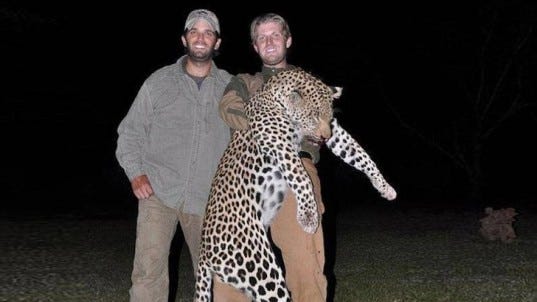
The controversy FYI or BTW, traces back to a 2011 safari in Zimbabwe, which became widely publicized in 2012 after photographs surfaced showing Donald Trump Jr. and Eric Trump posing with multiple dead animals. Among the images that circulated internationally were photographs of the brothers beside a large crocodile hanging from a tree, a kudu, and a dead elephant. In one widely shared image, Donald Trump Jr. appeared holding part of the elephant’s severed tail.
Now again, how is that normal behavior to anyone who has a brain capable of cognitive thought?
The backlash then was immediate and global. Animal welfare organizations, conservation advocates, and a large segment of the general public described the images as deeply disturbing and emblematic of excess, privilege, and performative cruelty. The criticism extended well beyond activist communities. Major international media outlets framed the images as a cultural flashpoint reflecting shifting attitudes about wildlife, conservation, and elite leisure.
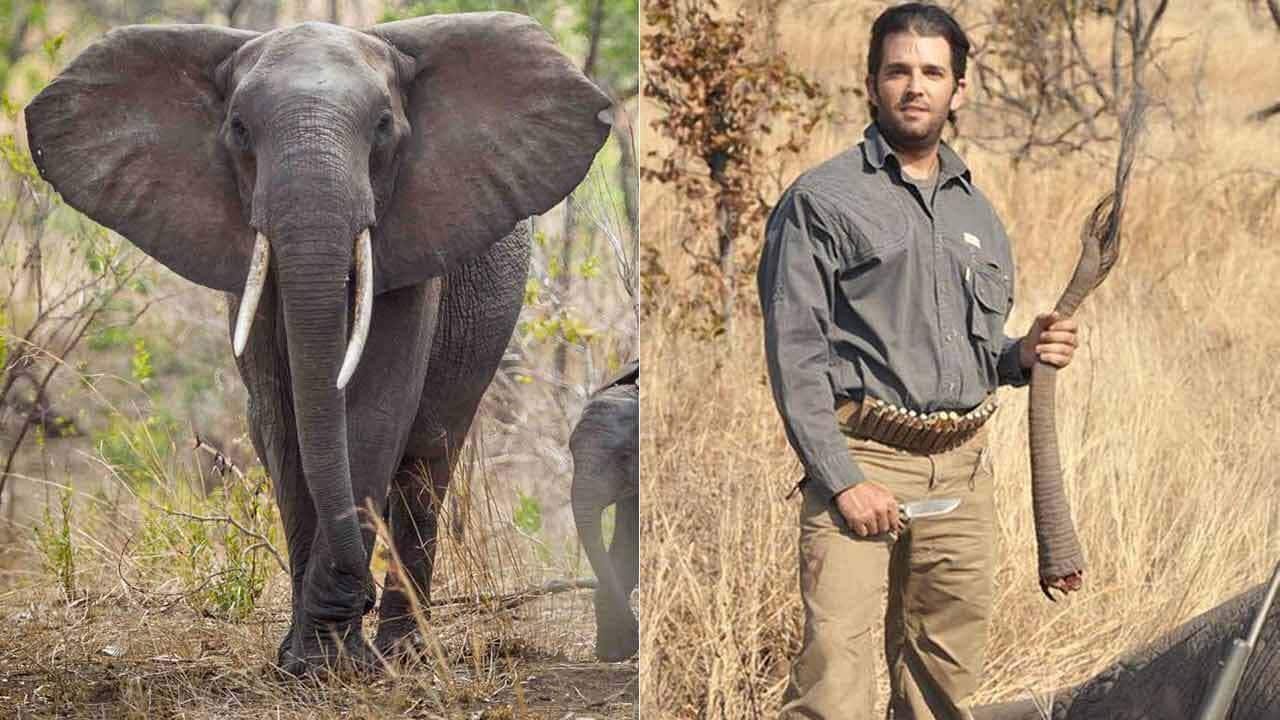
From a corporate responsibility perspective, the moment represented a reputational shock to a politically and commercially powerful family name. The Trump brand, already polarizing, became directly associated with highly visual symbols of wildlife killing and trophy culture.
From a messaging point of view—hello? This is not a hard one. Remember when Seamus was placed on the roof and had to sit in his own waste while Willard Romney—the person responsible for the name of these articles every week—drove to his vacation house, which even had an elevator for his car? Remember when that was an issue for Americans?
Donald Trump Jr. has repeatedly defended the hunts, arguing that they were conducted legally and that regulated big-game hunting generates revenue for conservation efforts and local communities. He has consistently described himself as a hunter and has stated that he makes no apologies for the activity.
That argument is not unique to the Trump family. It is a long-standing claim within parts of the conservation and tourism industry. But modern corporate responsibility standards do not stop at legal compliance. Contemporary environmental, social, and governance frameworks evaluate how behavior aligns with stakeholder values, public expectations, and long-term trust.
For individuals whose names operate as high-value commercial brands, the distinction is critical. Legal activity can still produce substantial reputational harm if it conflicts with evolving social norms. In a digital environment driven by images and viral content, photographs of influential figures posing beside dead wildlife become permanent brand artifacts, searchable and shareable long after the original controversy fades.
Years after the Zimbabwe images moved out of daily headlines, the issue returned in a more complex and politically sensitive form.
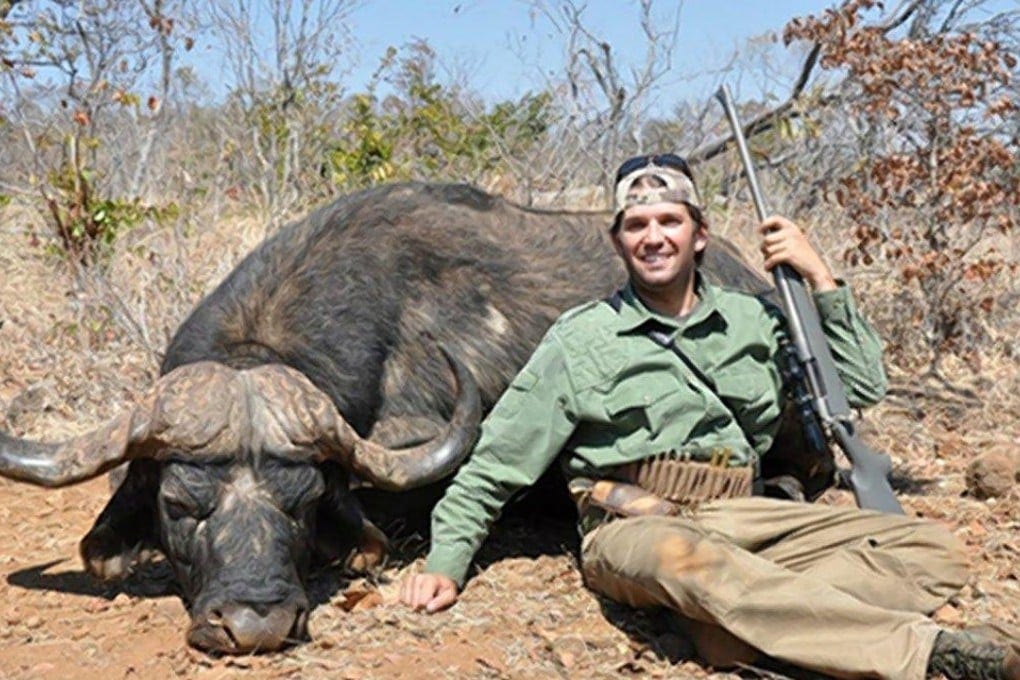
In 2019, Donald Trump Jr. traveled to Mongolia, where he hunted a rare argali sheep, a species considered endangered under international conservation frameworks. Although the hunt itself was authorized by Mongian authorities, the surrounding circumstances drew renewed scrutiny. Whereas I must ask: is it hard to shoot a sheep from far away? Is this type of sheep fast on its feet? Regardless, that’s fun for people? Killing a Sheep? That cannot be hard to shoot a Sheep from however many hundreds of feet away from it. You Hunters are odd. I do not get it.
Reporting at the time indicated that the trip received special treatment from local officials and involved high-level coordination. Go figure. Security and logistical support associated with the presence of a presidential family member reportedly generated significant public expense.
From a corporate responsibility and governance standpoint, this is where reputational risk intensifies. When a private leisure activity appears to benefit from the influence, access, or status tied to public office, the ethical issue extends beyond wildlife protection and into institutional integrity.
Even the appearance of preferential treatment undermines public confidence in the separation between private privilege and public power.
The controversy also highlights how wildlife ethics increasingly intersect with political and corporate branding. For global companies and public-facing business leaders, environmental responsibility has become one of the most visible markers of credibility. Corporations invest heavily in sustainability initiatives, biodiversity programs, and climate commitments precisely because consumers and investors now associate environmental stewardship with ethical leadership.
Trophy hunting, particularly involving vulnerable or protected species, collides directly with that expectation. The act of killing wildlife for recreation—when performed by elite figures with vast platforms—stands in sharp contrast to the sustainability narratives that dominate modern corporate communications.
For political families whose names anchor multiple business ventures, the contradiction becomes a business liability. A brand cannot credibly promote social responsibility and environmental awareness while its public representatives are best known for posing with dead elephants or endangered mountain sheep.
The issue has also carried a policy shadow. During the presidency of Donald Trump, the administration briefly moved to ease restrictions on the importation of elephant trophies from certain African countries. After intense public backlash from conservation organizations and bipartisan lawmakers, the policy was partially reversed.
The episode reinforced a deeper public concern: when the personal hobbies of a president’s family appear to align with regulatory shifts affecting wildlife protection, confidence in environmental policymaking erodes. Corporate responsibility depends not only on ethical behavior but on the credibility of the institutions that regulate markets and protect public goods.
In a business environment that relies on stable and trusted governance, the perception that personal interests may influence regulatory decisions creates lasting reputational damage.
In the global marketplace of attention, a single photograph of a dead elephant carries more cultural weight than a detailed policy brief on sustainable tourism. For powerful public figures, perception becomes reality.
Today’s standard for corporate citizenship requires more than compliance with local laws. It demands awareness of global ethical expectations, recognition that personal behavior directly affects commercial credibility, respect for environmental and cultural values that extend beyond national borders, and transparency about how status and influence shape access and opportunity.
For Donald Trump Jr. and Eric Trump, the images from Zimbabwe and the high-profile hunt in Mongolia have become permanent elements of their public identities. No press statement, conservation talking point, or messaging campaign can fully erase what those images communicate to a worldwide audience.
Corporate responsibility ultimately rests on aligning influence with stewardship. When powerful families choose spectacle over sensitivity—especially where vulnerable wildlife and public resources are involved—the cost is paid in trust.
In today’s economy, trust is not just a moral asset. It is the foundation of every credible brand.
Last, my criticism of the Democratic Party messaging and media handling centers on several key recurring themes. Messaging weaknesses include over-complexity and jargon.
Strategists often argue that Democrats “overthink” their message, using verbose, academic language and policy-heavy jargon that fails to resonate with the everyday experiences of voters.
The GOP uses one to three phrases or what are one tio three words as effective ways to pass on its messge.
That is why the term “Epstein Class” works. That is also why the GOP quickly started referring to Minnesota Mayor Jacob Frey as deranged, insane, or nuts, which I heard at a dinner said by a low-information Trump supporter since he said it last week. So again, what the GOP does works. It works fast. It works right away. The same thing they say in Congress, or push as the day’s talking point, is repeated by their followers after Fox News says it 18 times a day.
There is also a lack of a simple narrative. Critics frequently point to the absence of a concise, memorable slogan or “value proposition,” especially compared to the simple, repetitive messaging of their opponents. I have said this many times. I have literally been yelled at from outside my window for saying that Americans are not smart. First, second, and third, we should not be expected to be experts in political science. I did not become a politician because it is not my thing. That is why we depend on the people in government, who are voted in by the people in the USA, to do the right thing.
And, it is implied that you need to do the right thing for everyone—not just for your own wealth, power, or whatever you gain as a politician. We do not want to have to pay attention to politics. And honestly, do you really believe the general public wants to stay focused on politics?
No. We have lives.
We do not ask you to critique or be a part of our jobs. Politicians need to do their jobs.
They get paid in the low hundreds of thousands of dollars a year, while so many other things are covered, such as meals and transportation. And please—how many days a year do you actually have to show up in Congress? What is it, around 165 days or less depending on if Mike Johnson is the head of the party in that branch? You need to do your job so we do not have to pay attention to you and so we can get on with our lives.
This can leave voters confused about exactly what the party stands for. The party is also seen as reactive rather than proactive. It is often described as being on the “back foot,” struggling to respond to culture-war issues and failing to play offense by creating preemptive lines of attack.
Another major issue is failure on economic communication. While the party has passed significant legislation, such as the Inflation Reduction Act, Democrats have been criticized for failing to clearly communicate how these policies lower everyday costs, allowing opponents to dominate the narrative on inflation and affordability.
Media and strategy failures are another major concern. There is what many describe as an “information ecosystem” gap. Democrats are seen as lagging behind in building a permanent, year-round media infrastructure. While they spend heavily during election cycles, their presence often fades in off-years, whereas conservative media remains continuously engaged with its audience.
There is also a problem with segmented versus universal messaging. A tendency to segment communication too narrowly for different demographics—sometimes referred to as being “too cute by half”—can lead to a fragmented message that lacks a unifying core for the entire party.
In addition, many analysts believe Democrats misunderstand the attention economy. They suggest that many Democrats do not yet fully grasp the rules of social media, where character and values often matter more than detailed policy positions.
Finally, there is growing internal dissatisfaction.
Recent polls show that Democrats are significantly more likely than Republicans to describe their own party negatively, often using words such as “weak,” “apathetic,” or “disorganized.”