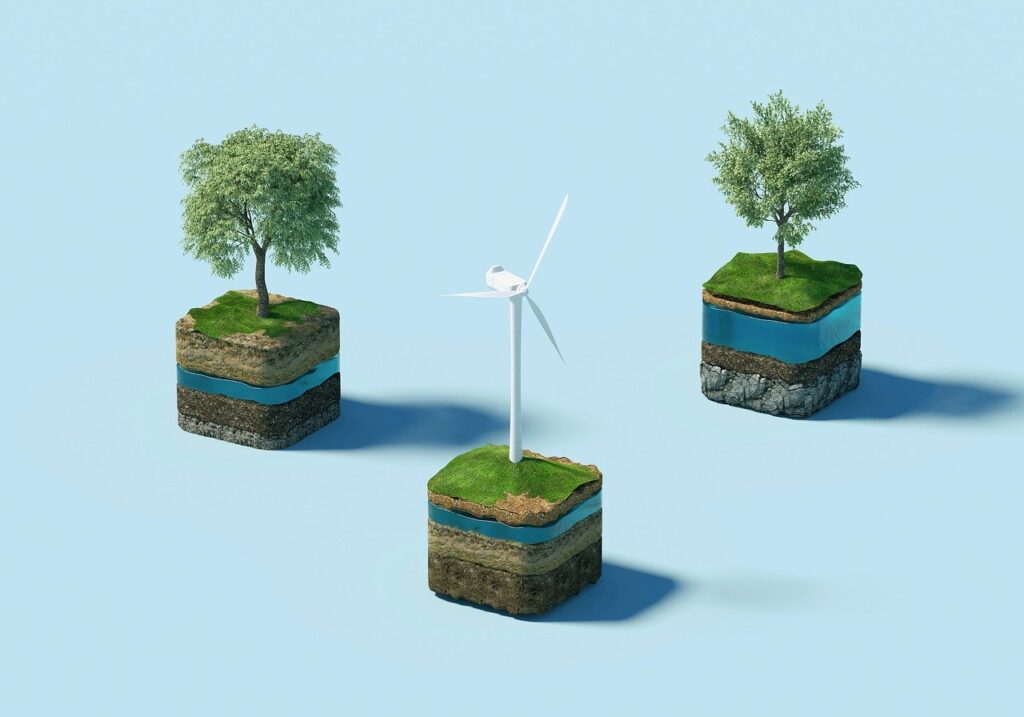
How Risky Private Investments in Planet-Cooling Technologies Could Shape Our Future
Investment decisions matter — not just for financial markets, but for the climate. In 2025, venture capital and private equity investors made headlines by putting more than $100 million into companies developing geoengineering technologies designed to artificially cool the planet — a dramatic sign of how financial incentives may be shaping the climate solutions narrative. Sustainable Action Now has closely followed this emerging trend because it raises fundamental questions about climate strategy, governance, and the future of sustainable policy. For additional analyses on climate innovations and controversies, see our climate category. (https://sustainableactionnow.org/category/climate/)
At the heart of this development is an evolving field called solar geoengineering — a suite of methods that aim to reduce global warming by reflecting a portion of the sun’s energy back into space. Proponents see this as a potential emergency tool in the climate toolkit; critics warn that deploying such technologies could carry significant environmental, political, and ethical risks.
The Rising Wave of Climate Tech Investment
According to reporting in E&E News by POLITICO, a constellation of venture capital firms, wealthy individuals, and even some government entities have collectively invested more than $115.8 million in startups focused on planetary cooling technologies. These efforts target approaches like dispersing reflective particles high in the atmosphere to deflect sunlight — an idea that still sits largely outside mainstream climate policy and scientific consensus. E&E News by POLITICO
Investors believe that if governments ever seriously commit to deploying geoengineering at scale, the market opportunity could be enormous. Some backers have voiced the calculation bluntly: should this technology prove effective, early financial support could translate into billions of dollars in returns. Yet, as one investor put it, their hope is that “we lost all our money and this wasn’t necessary.” E&E News by POLITICO
What These Technologies Are and How They Work
Solar geoengineering — also known in scientific literature as Solar Radiation Modification (SRM) — involves techniques intended to increase the reflectivity of the Earth’s atmosphere or surface. The most discussed variant is stratospheric aerosol injection (SAI), which would disperse reflective particles (similar to sulfur or engineered materials) into the stratosphere. The goal is to mimic the cooling effect seen after large volcanic eruptions. Wikipedia
Other concepts include marine cloud brightening (increasing cloud reflectivity over oceans) or even space-based geometries like orbital reflectors — ideas that push the boundary between climate science and technological ambition.
The Players and Their Bets
The geoengineering investment ecosystem is still narrow compared to mainstream climate tech sectors like renewable energy or carbon capture. Yet, notable names have emerged:
- Stardust Solutions has raised approximately $75 million to develop a proprietary reflective particle delivery system aimed at stratospheric deployment. E&E News by POLITICO
- Other startups, such as Make Sunsets, are selling “cooling credits” tied to small-scale releases of sulfuric aerosols into high altitudes — operations that have already drawn regulatory scrutiny. Wikipedia
- Some space startups are exploring larger geoengineering ideas, including orbital mirrors and sunshade constructs, though these are still largely conceptual. E&E News by POLITICO
These investments are often made by firms that typically back high-risk, high-reward technologies. Because solar geoengineering has no established commercial market today, most traditional venture firms remain cautious. Still, a cadre of younger, risk-tolerant investors see potential where others see taboo. E&E News by POLITICO
Scientific and Ethical Concerns
While the idea of cooling the planet might sound appealing, scientists and climate advocates emphasize that SRM and related interventions do not address the root cause of climate change — greenhouse gas emissions. Instead, they would mask warming while leaving ocean acidification and carbon pollution unaddressed. Moreover, the physics of large-scale planetary intervention are fraught with uncertainties that could have unintended environmental consequences.
Examples of potential risks include:
- Altered weather patterns, including changes in precipitation that could disrupt agriculture.
- Termination shock, where sudden cessation of geoengineering leads to a rapid temperature spike. E&E News by POLITICO
- Ozone depletion and atmospheric chemistry impacts, particularly for sulfur-based aerosol schemes. Wikipedia
These risks help explain why many scientists argue that geoengineering should remain a subject of controlled research and robust governance, not a commercially driven venture with uncertain regulation.
Governance Gaps and Global Implications
One of the central challenges with private funding of planetary climate technologies is governance. There are no comprehensive international frameworks governing the deployment of SRM, meaning that decisions could be made by individual nations — or potentially by private actors seeking market advantage. This raises concerns about equity, fairness, and geopolitical tensions, given that climate effects would cross borders and affect populations unevenly.
Critics also highlight the moral hazard: the fear that optimism about geoengineering reduces the urgency to cut emissions through proven mitigation strategies.
Where This Fits in Climate Action
At Sustainable Action Now, we emphasize that climate progress must be rooted in decarbonization, adaptation, and equitable policy frameworks. While research into tools like SRM could be valuable, private investment strategies focused on profit from climate catastrophe scenarios are controversial and potentially dangerous if divorced from broader societal priorities.
For readers interested in ongoing developments in climate innovation, policy, and ethical debates, our climate category offers regular updates and analysis: https://sustainableactionnow.org/category/climate/.
The Path Forward: Balanced Climate Solutions
The infusion of capital into climate-related technologies — whether for adaptation, mitigation, or controversial interventions — underscores the urgency of climate risk management. However, sustainable action requires transparency, stringent scientific review, inclusive governance, and clear ethical standards that prioritize people and ecosystems over speculative financial returns.
As the climate crisis deepens, the debate around geoengineering and investment incentives will intensify. What is clear today is that speculative bets on planetary cooling technologies raise as many questions as possibilities. Aligning investment with climate justice and scientifically sound practices remains essential if we are to build a resilient, equitable future.
“‘Incredibly Reckless’: Trump’s Wind Halt Stuns Even Some Allies”
A Sustainable Action Now Report on Renewable Energy, National Policy, and Climate Implications
In late December 2025, the U.S. federal government’s dramatic decision to halt five major offshore wind energy projects — many already under construction — sent shockwaves through the clean energy sector, political leadership circles, and communities preparing for more affordable, reliable power. The pause — justified by the administration as necessary to address national security concerns — was widely criticized as incredibly reckless by energy analysts, corporate developers, Republican allies, and environmental advocates alike. HabitableZone+1
This decision comes at a moment of mounting pressure to build resilient, low-carbon energy infrastructure. It also highlights how federal climate and energy policy can profoundly influence the trajectory of emissions, technology deployment, and economic opportunity. To understand both the immediate and long-term impacts of this policy shift, it is essential to explore its context, rationale, and potential consequences for the climate and energy landscape. For continuing coverage on climate policy and renewable energy debates, see our climate category. (https://sustainableactionnow.org/category/climate/)
What Happened: A Major Federal Wind Decision
On December 22, 2025, the U.S. Department of the Interior announced it was suspending leases for five large offshore wind projects located along the East Coast, citing classified national security concerns raised by the Department of Defense. S&P Global
The affected projects included some of the nation’s largest planned or partially built renewable energy installations, such as:
- Coastal Virginia Offshore Wind (CVOW) — a 2.6-gigawatt project expected to power hundreds of thousands of homes;
- Vineyard Wind 1 off Massachusetts;
- Revolution Wind serving Rhode Island and Connecticut;
- Sunrise Wind and Empire Wind near New York. S&P Global
Officials characterized the pause as temporary, intended to give federal agencies — including Interior and Defense — time to assess and mitigate perceived security risks. However, they did not publicly disclose specific technical details of the potential threats. S&P Global
Bipartisan Disquiet — and Broader Unexpected Opposition
While opposition to renewable energy restrictions is often expected from climate advocates and Democratic leaders, the reaction included notable dissent from some within Republican political circles and business communities who were concerned about energy affordability, grid reliability, and investment certainty.
For example, several Republican lawmakers and energy stakeholders have expressed alarm at the pause, pointing out that:
- These offshore projects had already passed extensive federal permitting and national security reviews prior to this decision;
- Thousands of jobs and billions of dollars of previously sunk investment are now at risk;
- Delays will likely raise energy costs for consumers, especially at a time of rising demand. Reuters
In Virginia, utility developer Dominion Energy — which is constructing CVOW — has filed a lawsuit against the administration, describing the halt as arbitrary and capricious and warning it could jeopardize grid reliability for nearly 660,000 homes and major critical infrastructure. AP News
Four Democratic governors — including those from New York, Connecticut, Massachusetts, and Rhode Island — also publicly urged the administration to lift the freeze, branding the stated security rationale as a pretext that undermines both regional energy strategies and economic development. Reuters
Economic and Community Impacts
Offshore wind projects are designed not merely as energy infrastructure, but as engines of regional economic growth. The decision’s impact is broad and multifaceted:
- Job creation — Thousands of union and supply chain jobs associated with offshore wind construction are now in jeopardy. AOL
- Energy affordability — With demand rising, especially from data centers and manufacturing, delays in new electricity generation capacity could translate into higher energy prices. HabitableZone
- Investor confidence — The ability of federal policy to reverse or pause large-scale energy investments creates uncertainty for both domestic and international investors, dampening future clean energy financing. Reuters
In northeastern states — where wholesale power prices are sensitive to supply constraints — grid operators warned that missing generation capacity from stalled wind projects could strain systems and threaten reliability in peak seasons. HabitableZone
Climate and Policy Implications
The pause comes at a critical juncture for the global climate agenda. Offshore wind is one of the most rapidly deployable large-scale clean energy technologies available today, playing a key role in reducing carbon emissions, diversifying energy sources, and enhancing long-term climate resilience. Reuters
The United States, as one of the world’s largest carbon emitters, has documented commitments to transition energy systems in ways that are consistent with climate science and international carbon reduction targets. Interruptions to clean energy deployment — especially for reasons unrelated to direct engineering safety or environmental harm — risk slowing that progress. For ongoing examination of the intersection between policy decisions and climate goals, visit our climate category. (https://sustainableactionnow.org/category/climate/)
Moreover, analysts note that reliance on fossil fuels and delayed expansion of renewables could exacerbate climate impacts such as extreme weather events, sea level rise, and biodiversity loss — trends that should motivate robust investment in clean energy rather than rollback. Reuters
Legal and Legislative Fallout
The wind project halt is already attracting legal action. Dominion Energy’s lawsuit could prompt federal court reviews of whether the administration’s actions exceeded statutory authority or violated constitutional standards related to due process and regulatory stability. AP News
In Congress, the decision could influence negotiations over bipartisan permitting reform bills. Observers suggest that Democrats might push for stronger legal protections for energy permits, aiming to prevent retroactive reversals once projects receive approval. Meanwhile, some Republican energy leaders argue that permitting certainty remains a shared priority, even amid policy disagreements. Axios
Clean Energy at the Crossroads
The suspension of major offshore wind projects highlights a broader tension at the national level: between short-term political maneuvering and long-term infrastructure planning; between fossil fuel reliance and the imperative to decarbonize; between energy affordability and climate commitment.
For advocates, investors, and communities invested in renewable energy’s growth, the message is clear:
- Climate policy must be predictable and grounded in science.
- Clean energy development cannot be undermined by political whim.
- Economic and environmental priorities can and should align.
Decisions like this one have ramifications far beyond construction delays — they signal where future energy systems might be heading, and whether critical climate objectives will be achievable.
A Moment of Reckoning
President Trump’s December 2025 wind project halt marks one of the most consequential federal interventions in U.S. renewable energy policy in recent years. Described by critics as incredibly reckless, it underscores how political decisions can reverberate through energy markets, climate goals, legal systems, and everyday lives.
As Renewable Energy advocates and environmental stakeholders weigh the next steps, this episode will likely be referenced as a turning point — for better or worse — in America’s energy and climate trajectory. For ongoing analysis of how this policy affects climate outcomes and clean energy deployment, explore our climate category. (https://sustainableactionnow.org/category/climate/)
Closing Reflection
The December Fireside Chat was a reminder that meaningful change does not come from isolated acts of kindness — it comes from connected systems of care.
2025 proved that when people organize, collaborate, and remain accountable, suffering can be transformed into survival. And as this community moves forward, the message is clear:
The defense of animals is no longer a solitary mission — it is a coordinated global responsibility.